
What Is Caregiver Burnout? The Hidden Toll of Caring Through Chronic Uncertainty
What is caregiver burnout, and why does it feel different when rare disease caregiving is filled with uncertainty? Here’s how to recognize the signs early and find support before a crisis becomes the starting point.
Caregiver burnout isn't a sign of weakness, but it can feel that way. Many caregivers quietly wonder whether they've somehow failed, even while giving everything they have to someone they love.
Caregiver burnout often develops slowly. It can build through years of appointments, unanswered questions, care coordination, emotional strain, and decisions that never seem simple. You may still be showing up every day, but inside, you may feel drained, disconnected, or unsure how much longer you can keep going this way.
For rare disease families, this pressure can be even harder. You may not be dealing with one clear diagnosis, one simple care plan, or one short season of caregiving. You may be living with chronic uncertainty, and that can take a serious toll.
Keep reading to understand what caregiver burnout is, why rare disease caregivers can experience it differently, and how support can begin before a crisis becomes the starting point.
What Is Caregiver Burnout?
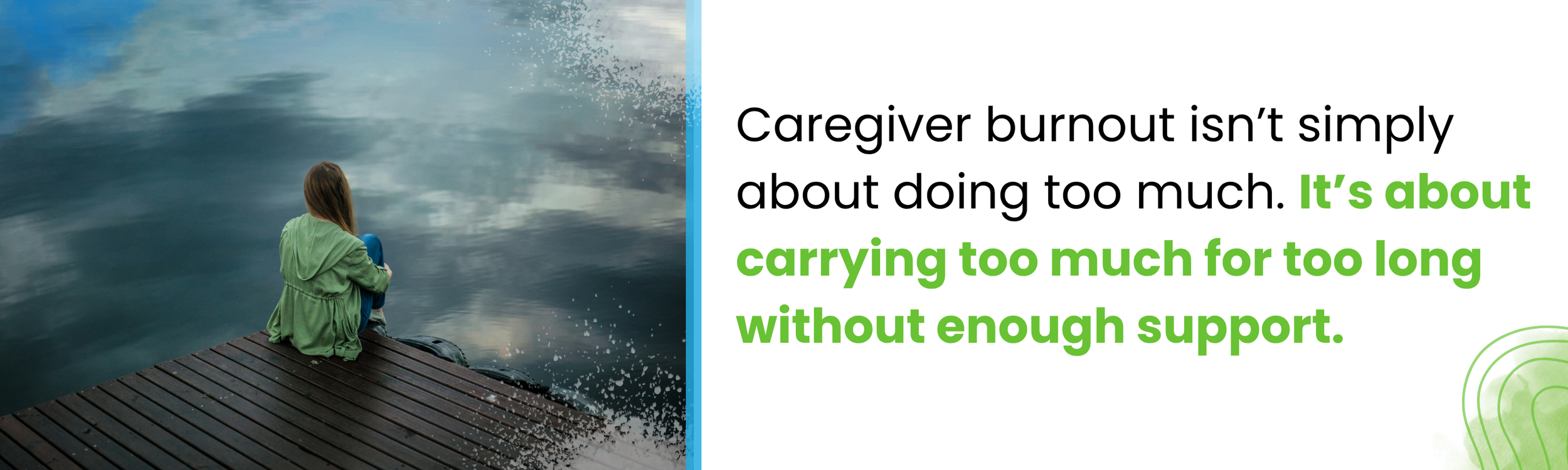
Caregiver burnout is a state of emotional, physical, and mental exhaustion that can happen when caregiving demands continue without enough support, rest, or relief. It’s not just having a hard day. It’s what can happen when stress becomes constant and recovery never really comes.
Stress may come and go. Fatigue may improve after rest. However, burnout feels heavier because it can change how you think, feel, respond, and connect with others.
You may still care deeply, but feel emotionally numb. You may still be responsible, but find it harder to concentrate. You may still love your family member, but feel irritable, guilty, resentful, or detached.
That doesn’t make you a bad caregiver. It means your mind and body are responding to sustained pressure.
For rare disease caregivers, chronic uncertainty can make burnout worse. When answers are delayed, symptoms change, treatments are limited, or care plans remain unclear, your brain rarely gets the relief of knowing what comes next.
According toGlobal Genes, rare diseases affect 400 million people worldwide, 95% of rare diseases lack an FDA-approved treatment, and the average time to receive an accurate diagnosis is over six years. For caregivers, that can mean years of searching, explaining, waiting, and trying to make decisions without enough clarity.
Why Rare Disease Caregivers Experience Burnout Differently
Rare disease caregiving can be different because the pressure often comes from different forces. Here are five reasons burnout can develop differently for rare disease caregivers.
Long diagnostic journeys
A long diagnostic journey can create exhaustion before treatment even begins. You may move between specialists, repeat the same history, challenge dismissive answers, and keep pushing because you know something still isn’t right.
Medical complexity
Medical complexity can add another layer. You may be tracking symptoms, medications, equipment, therapies, school needs, insurance forms, and care instructions that other people don’t always understand.
Constant advocacy
Constant advocacy can also wear you down. Rare disease caregivers often have to explain the condition to teachers, employers, relatives, providers, and even healthcare teams. That can make you feel like you’re always defending what your family needs.
Emotional uncertainty
Then there’s emotional uncertainty. You may grieve what has changed while also trying to stay hopeful. You may worry about progression, treatment access, finances, or what the future may look like. That kind of anticipatory grief can be hard to explain because the loss isn’t always visible to others.
Isolation
Isolation can make all of this heavier. When people around you don’t understand the condition or the caregiving role, you may start keeping things to yourself. Over time, carrying it alone can become part of burnout.
Signs Caregiver Burnout May Be Developing
Caregiver burnout doesn’t look the same for everyone. Some people feel constantly tired. Others feel numb, angry, anxious, or disconnected. The signs may appear gradually, which can make them easy to overlook or dismiss as “just part of caregiving”.
Some signs and symptoms of caregiver burnout may include:
Emotional exhaustion, even after rest
Feeling numb, detached, hopeless, or unusually tearful
Irritability, guilt, resentment, or loss of patience
Difficulty concentrating or making decisions
Withdrawing from friends, family, or support systems
Poor sleep, appetite changes, headaches, or body tension
Losing interest in things that once brought comfort
Feeling like you’re moving through the day on autopilot
Feeling misunderstood, judged, or unable to explain what would help
These signs aren’t a reflection of your strength or commitment. They’re signals that you;ve been carrying a great deal for a long time. Your body, mind, and emotions are asking for support.
If these experiences feel familiar, talking with a trusted healthcare professional, counselor, or caregiver support community can help before burnout takes a deeper toll.
The National Institute of Mental Health recommends seeking professional help when severe or distressing symptoms last two weeks or longer. This includes sleep problems, appetite changes, difficulty concentrating, irritability, loss of interest, or trouble completing usual tasks.
Support Before Crisis
Many caregiving resources talk about burnout after it happens. But for rare disease families, prevention matters just as much. Support should begin when the pressure starts building, not only when everything feels impossible.
Support before crisis can include:
Naming where you are emotionally: The Emotional Journey Map can help caregivers recognize emotional stages, identify pressure points, and talk about support needs before crisis takes over.
Finding peer support: When you sit with people who understand rare disease caregiving, you don’t have to explain every detail before you feel understood. That kind of validation can reduce isolation and help you see that your reactions aren’t personal failure.
Joining weekly support groups: Weekly support groups can give caregivers a place to speak honestly, listen, and feel less alone. They can also help families notice burnout signs earlier because other caregivers may recognize patterns you’ve started to normalize.
Building community connection: The value of rare disease caregiver community support is that it gives caregivers shared understanding before isolation becomes harder to manage.
Knowing your crisis resources: If you feel unsafe, unable to cope, or worried about your wellbeing, reaching out to a healthcare professional, crisis service, or trusted support person isn’t overreacting. It’s part of protecting you and the family you care for.
Asking for help early: Asking for help early can feel uncomfortable, especially if you’re used to handling everything. But early support isn’t a sign that you’re giving up. It’s one way of making caregiving more sustainable.
Caregivers Need Care Too
Caregivers are often seen as the people who make care possible for everyone else. Yet caregivers also need support, encouragement, and safe places to be honest about what the journey is asking of them.
When caregivers are supported, families benefit. Patients benefit too, because the people helping with daily care have a better chance of staying emotionally present, informed, and connected.
Healthcare teams also benefit when caregiver wellbeing is part of the conversation. A caregiver who feels supported may be better able to communicate changes, ask questions, manage information, and participate in care planning.
Communities benefit as well. Rare disease caregiving does not happen only inside hospitals or homes. It affects schools, workplaces, family systems, nonprofit partners, and support networks.
That’s why caregiver mental health shouldn’t be treated as separate from rare disease care. It’s part of the care system.
FAQ: Caregiver Burnout and Rare Disease Caregiving
Q: What is caregiver burnout?
Caregiver burnout is emotional, physical, and mental exhaustion that develops when caregiving demands continue for too long without enough support. It can affect your mood, energy, relationships, concentration, and ability to cope.
Q: What causes caregiver burnout?
Caregiver burnout can be caused by long-term stress, lack of support, emotional strain, limited rest, financial pressure, care coordination, isolation, and constant responsibility. In rare disease caregiving, uncertainty and diagnostic delays can make the pressure even heavier.
Q: How do I know if I need help?
You may need help if you feel emotionally exhausted, numb, hopeless, unusually irritable, withdrawn, unable to concentrate, or physically worn down for an extended period. You don’t have to wait until crisis before reaching out.
Q: Why are rare disease caregivers at higher risk of burnout?
Rare disease caregivers may face long diagnostic journeys, limited treatment options, complex symptoms, constant advocacy, and little understanding from others. These pressures can build over time and make burnout harder to recognize early.
Q: Where can rare disease caregivers find support?
Rare disease caregivers can look for peer support groups, disease-specific organizations, crisis resources, healthcare team guidance, counseling, caregiver tools, and community programs. Raregivers also offers caregiver-centered support through emotional mapping and weekly groups.
Burnout Doesn’t Mean You’ve Failed
Burnout does not mean you have failed as a caregiver. It means you have been carrying a level of responsibility and uncertainty that no one should have to carry alone.
You don't have to wait until you're completely exhausted to deserve support. For rare disease families, support is most effective when it begins before a crisis. That may mean naming what you are feeling, joining a group, using a tool that helps you reflect, asking your care team for guidance, or reaching out when the pressure starts to feel too heavy.
Raregivers creates a spaces where caregivers can feel understood, supported, and less alone. Whether through our Weekly Support Groups, the Emotional Journey Map, or other community resources, our goal is to help caregivers find connection and support before burnout becomes a breaking point.
