
The Healing Power of Community for Rare Disease Caregivers
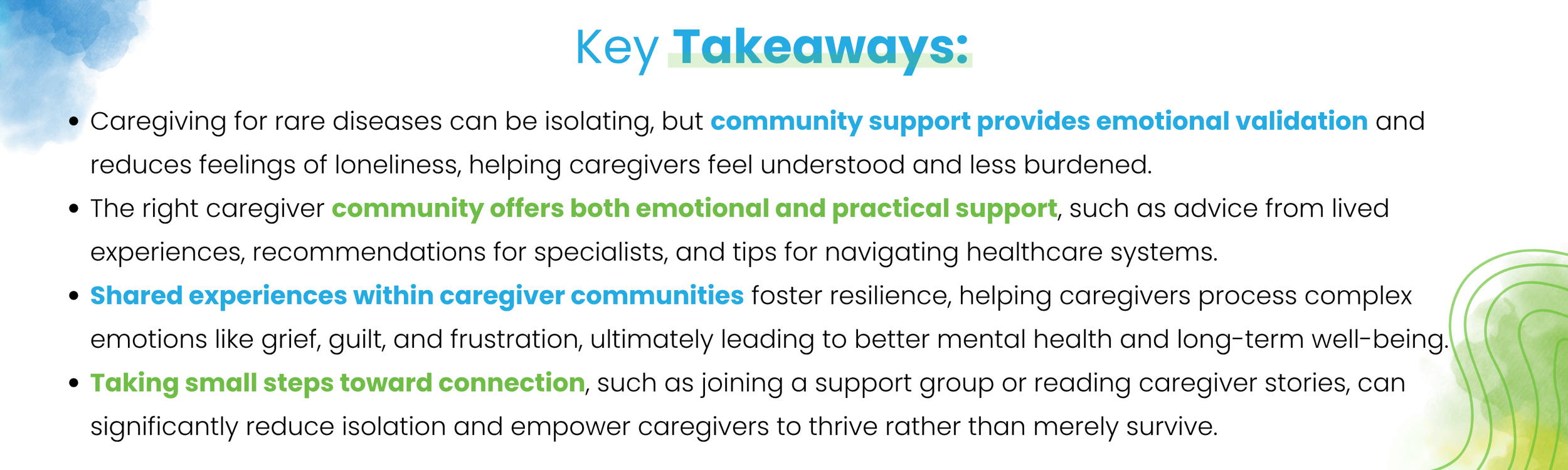
Caregiving for someone with a rare disease is not just difficult…it’s deeply complex.
Uncertainty around diagnosis, limited treatment pathways, and a lack of widely available resources can create a reality that feels hard to explain to others, let alone navigate alone.
Many caregivers find themselves stepping into roles they were never prepared for, often without clear guidance or a roadmap. Even when support systems exist, they may not fully reflect the unique challenges that come with rare disease caregiving.
That gap can lead to a quiet but persistent sense of isolation.
It’s not only about being physically alone—it’s about feeling unseen in experiences that are difficult for others to fully understand. Friends, extended family, and even healthcare providers may offer support, but still miss the day-to-day emotional and logistical weight caregivers carry.
Over time, holding that weight without consistent, meaningful connection can become exhausting. It can affect mental health, contributing to feelings of anxiety, burnout, or emotional fatigue that are often pushed aside in order to keep going.
At the same time, isolation in caregiving is more common than it may seem—and recognizing that truth matters.
Connection, when it’s grounded in shared understanding, can make a meaningful difference. Whether through community, conversation, or simply knowing someone else “gets it,” support can help caregivers feel less alone in what they’re carrying.
No one is meant to navigate this journey entirely on their own.
What “Community Support” Really Means for Caregivers
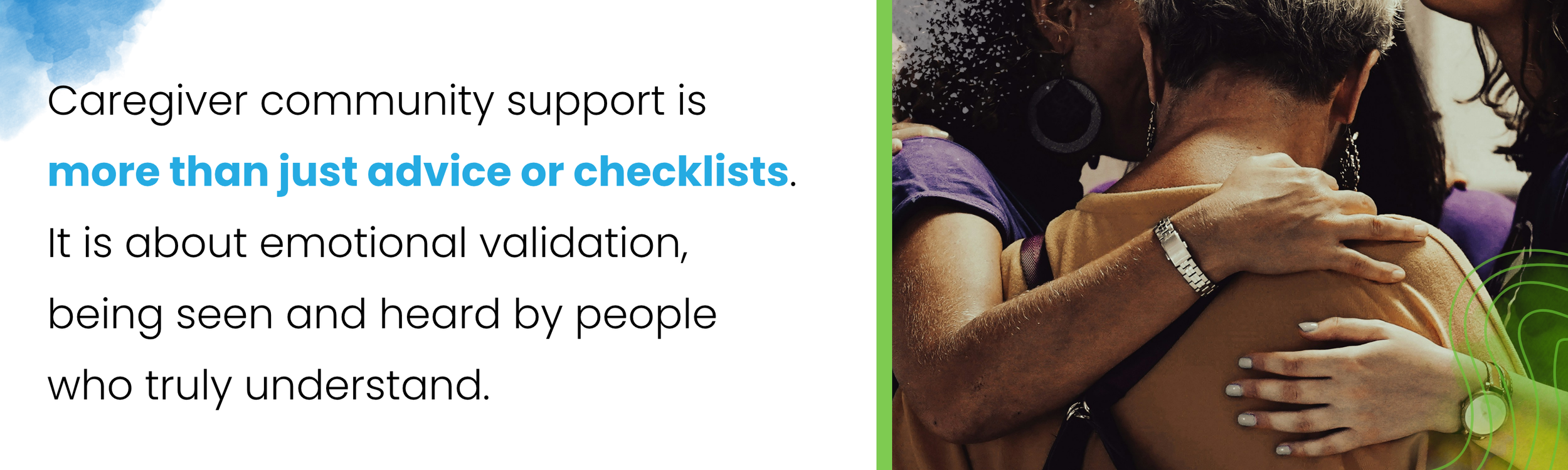
Caregiver community support is more than just advice or checklists. It reflects a deeper need for emotional validation: feeling seen, heard, and understood by people who recognize the realities of rare disease caregiving.
For many caregivers, that kind of understanding can be difficult to find in everyday interactions. Support may be offered, but it doesn’t always capture the full emotional and practical weight they carry.
The right community offers something more grounded and meaningful.
It creates a space where caregivers can share their experiences openly, without judgment or the need to explain every detail. In those moments, being heard by someone who truly understands can make a real difference.
Over time, that kind of connection becomes an important source of emotional support.
Caregivers can find this support in various types of communities:
Peer-to-peer support: Other caregivers who understand the emotional and practical challenges you face.
Condition-specific groups: Rare disease support groups focused on specific conditions, offering targeted advice and understanding.
Advocacy and nonprofit communities: Like Raregivers, these organizations foster a sense of belonging and offer resources to caregivers in need.
What makes these communities so valuable is the lived experience they offer. The support shared in these spaces comes from people who have walked a similar path and understand the realities of rare disease caregiving.
That shared understanding creates a connection that feels real, relevant, and grounded in what caregivers are actually experiencing.
Finding the right rare caregiver community can offer support that feels both authentic and meaningful.
The Emotional and Mental Health Benefits of Community
The benefits of caregiver community support extend beyond emotional reassurance. When caregivers feel supported, they are often better equipped to sustain the long-term demands of caregiving.
Connection plays a meaningful role in that sustainability.
The emotional relief that comes from engaging with others who share similar experiences can support stronger mental well-being and a greater sense of resilience over time.
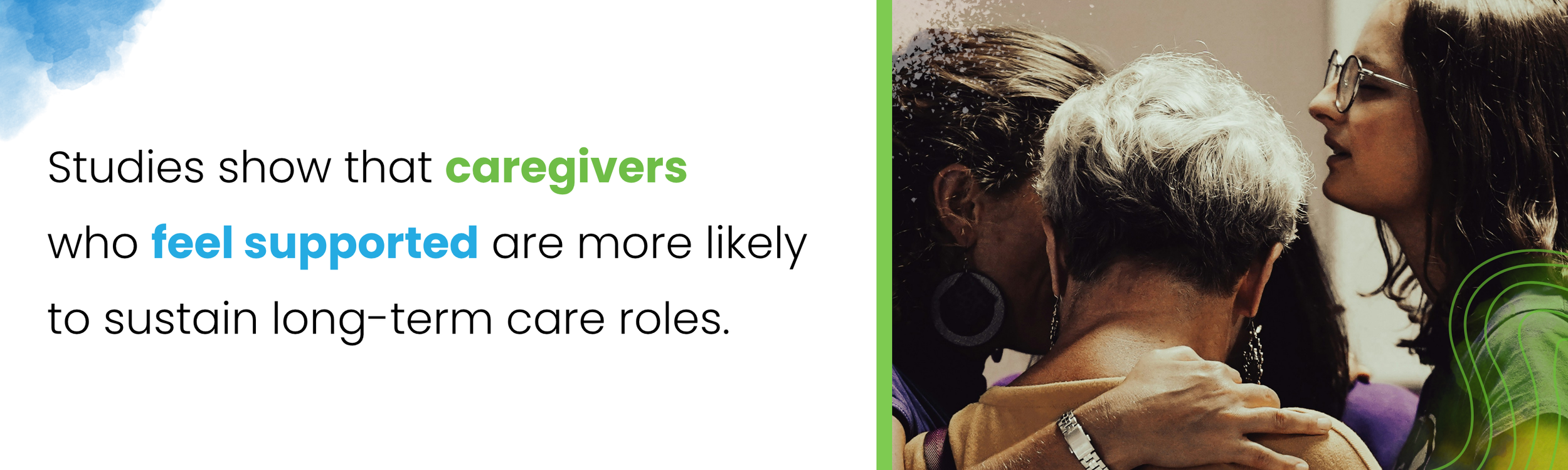
Support from a community can help reduce feelings of loneliness and caregiver burnout. Sharing experiences with others creates space to process emotions and acknowledge complex feelings (such as grief, guilt, frustration, and hope) without needing to filter or explain them.
That kind of emotional processing can support resilience over time. It doesn’t remove the challenges, but it can help caregivers move through them with greater clarity and steadiness.
Emotional support is not just comforting: it plays an important role in sustaining caregiving. Feeling heard and supported can ease mental and physical strain, contributing to overall well-being in a way that makes long-term care more manageable.
The Power of Shared Experience: “Someone Else Understands”
One of the most meaningful aspects of community support is hearing someone else say, “I understand.”
For many caregivers, a shift happens when they realize they are not alone in what they’re experiencing.
Sharing stories with others navigating similar challenges creates a connection that feels difficult to replicate elsewhere.
For caregivers, story-sharing can be a form of emotional release. It offers a way to express complex feelings without needing to explain or justify them. Hearing “me too” can ease a sense of isolation and help validate experiences that often go unspoken.
Within a rare disease caregiver community, that shared understanding can foster a strong sense of connection and belonging, one that helps caregivers feel recognized, supported, and less alone in their journey.
Practical Benefits of Caregiver Communities
While emotional support is essential, caregiver communities also offer practical value. They provide access to guidance that can make day-to-day caregiving feel more manageable and informed.
Community support isn’t only about feeling understood, it’s also about gaining insights that can be applied in real situations.
Caregivers often benefit from shared knowledge within these spaces, including:
Access to real-world advice based on lived experience
Recommendations for specialists, treatments, and resources
Guidance on navigating healthcare systems and insurance
Tips for managing daily caregiving responsibilities
Insight into what to expect at different stages of a condition
These insights come directly from others who have faced similar challenges, which makes them especially relevant.
That lived perspective can offer a level of clarity and practicality that general information often lacks, helping caregivers feel more prepared as they navigate their journey.
Breaking Through Caregiver Isolation
Despite the benefits, many caregivers hesitate to seek out community support. The reasons are often practical and personal…limited time and energy, along with the vulnerability that can come with opening up to others.
That hesitation is understandable, but connection doesn’t have to happen all at once. Even small, manageable steps can begin to ease a sense of isolation.
Some ways caregivers choose to start include:
Reading stories and experiences from other caregivers
Engaging with nonprofit communities like Raregivers
The key is consistency over time.
Building meaningful connections can take patience, but even gradual engagement can offer emotional relief and help make the caregiving journey feel less isolating.
How Raregivers Supports the Caregiver Community
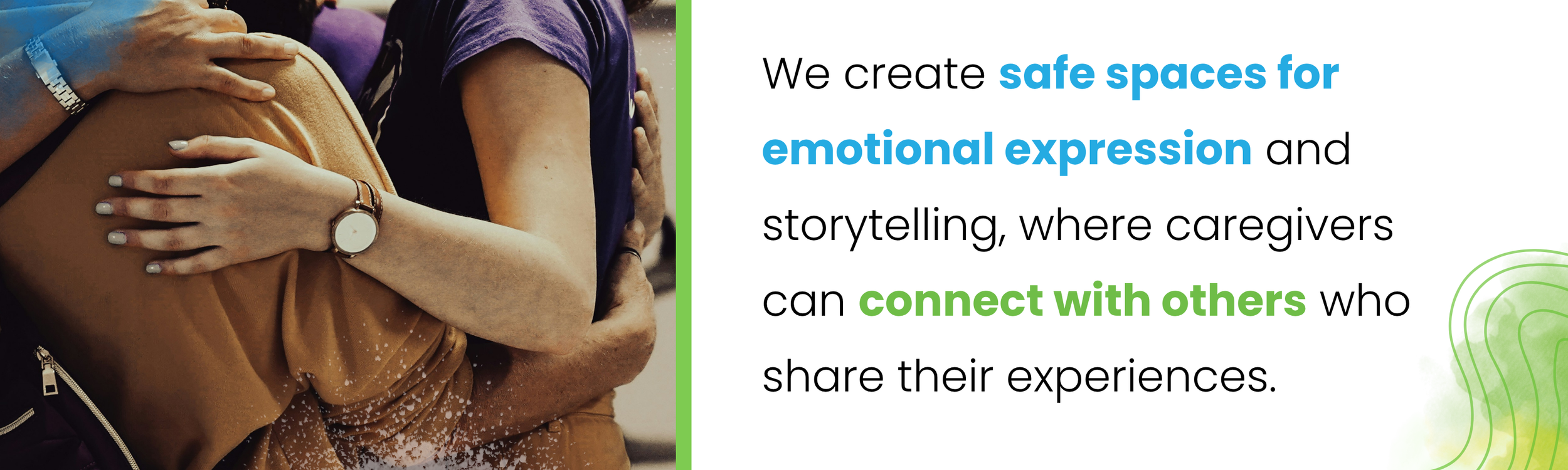
Raregivers is committed to helping build and sustain supportive communities for caregivers. The focus is on creating safe, intentional spaces for emotional expression and storytelling, where caregivers can connect with others who understand their experiences.
Through these spaces, caregivers are able to engage across conditions and personal journeys, fostering a sense of connection that goes beyond any single diagnosis. Opportunities for involvement (through events, advocacy, and partnerships) offer additional ways to stay connected and supported.
Ongoing engagement remains a central part of that support.
Through shared stories, community groups, and accessible content, caregivers are invited to participate in ways that feel manageable and meaningful. The goal is to ensure that no caregiver feels isolated, and that support remains consistent over time.
You Don’t Have to Do This Alone
The core message is simple: caregiving does not have to be navigated in isolation. Support can be both available and meaningful, especially when it’s rooted in shared understanding.
The strength required to care for someone with a rare disease is significant, and choosing to seek connection reflects that strength.
Taking one step toward community can look different for everyone. It might mean joining a support group, reading about others’ experiences, or connecting with a nonprofit like Raregivers.
Support doesn’t always come from having the right answers.
Often, it begins with feeling seen, heard, and understood…and recognizing that others are walking a similar path.
