
The Weight No One Sees: Raregivers Recognized as a Mental Health Resource by CNBC Cures
Rare disease mental health support shouldn't begin after families reach crisis. Here's why visibility, connection, and emotional support matter every day.
Rare disease care doesn't stop when you leave an appointment. In fact, most of the time, that's when another part of your journey begins.
You may leave with new medications to organize, appointments to book, questions that still need answers, and a family looking to you for reassurance.
While you're helping everyone else make sense of what's happening, you may also be carrying fear, uncertainty, exhaustion, or grief that nobody asked about.
Those feelings are easy to overlook because caregiving doesn't pause. You still show up, keep things moving, and do everything you can for the person you love. Yet that doesn't mean the emotional weight has become any lighter.
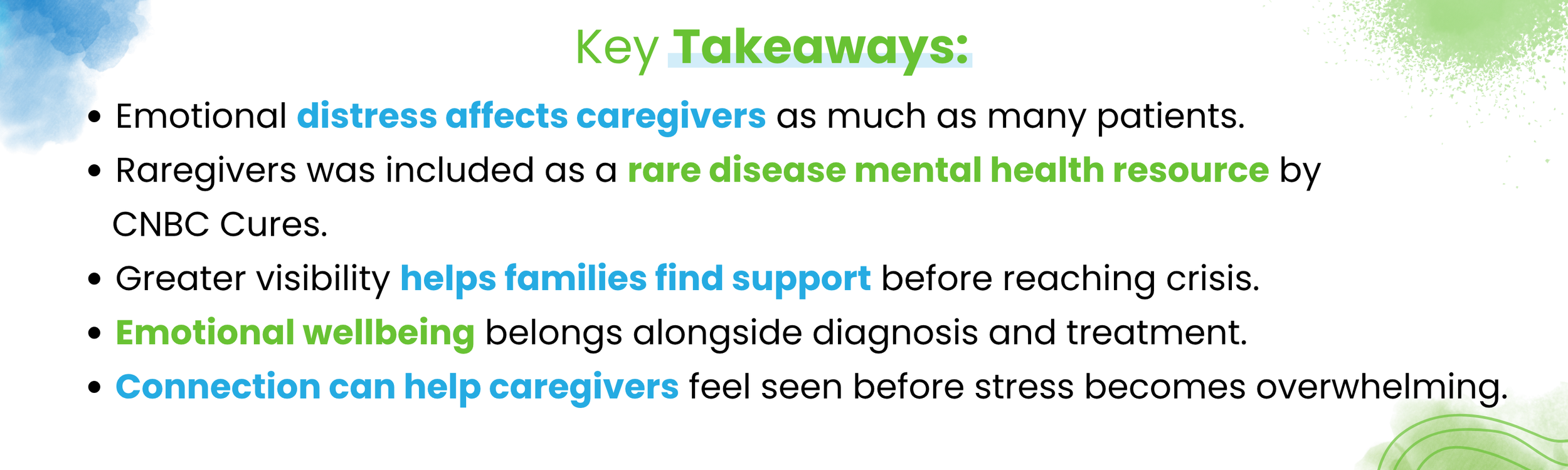
The June 12, 2026, CNBC Cures newsletter helped bring those often-overlooked experiences into the conversation. By highlighting the emotional impact of rare disease alongside trusted support resources, it reinforced something many caregivers already know: emotional wellbeing deserves attention long before someone reaches a breaking point.
Raregivers is grateful to be included in the newsletter’s “Where to Turn If You Need Help” section. For caregivers, this recognition can make emotional support easier to see and access during difficult stages of care.
A 2025 survey of 958 rare disease patients and caregivers found that 82.4% experienced frequent emotional distress that disrupted daily life. However, only 30% had accessed professional mental health services, despite caregivers reporting distress levels comparable to patients.
Those findings show how easily emotional strain can remain hidden behind appointments, routines, and daily responsibilities.
Continue reading to see how greater visibility can help families seek support before stress becomes overwhelming.
Raregivers Included as an Emotional Support Resource
After exploring the emotional impact of living with a rare disease, the CNBC Cures newsletter introduced readers to organizations providing specialized mental health and community support.
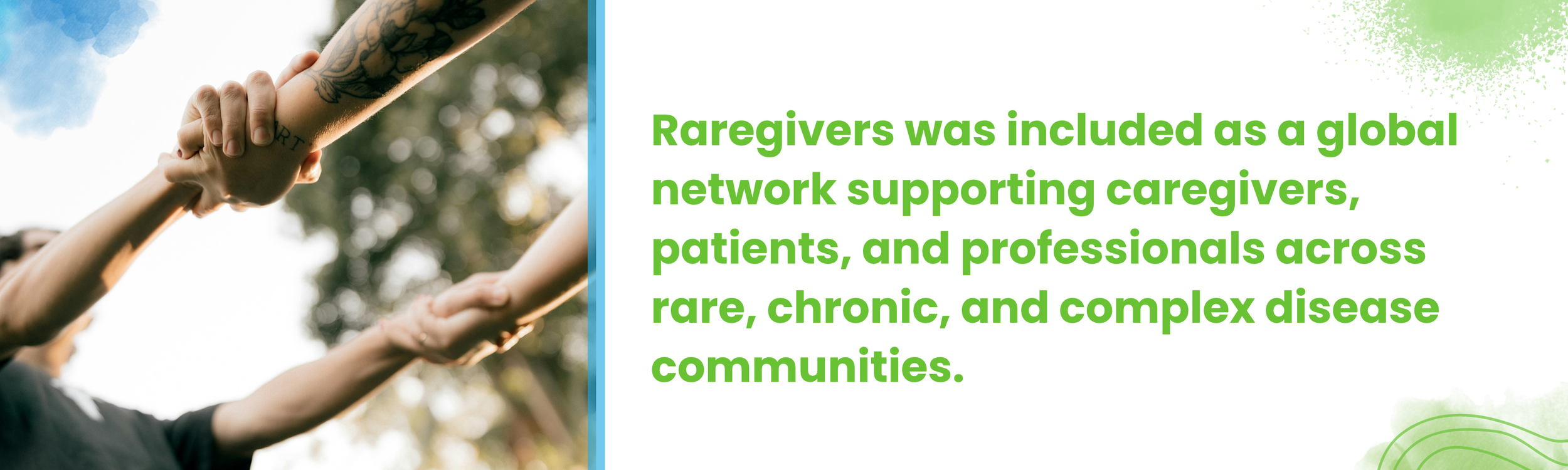
Raregivers is grateful for this recognition because it brings greater visibility to something caregivers have known for years: emotional wellbeing deserves the same attention as every other part of the care journey.
Too often, caregivers become the coordinators, advocates, researchers, and emotional anchors for their families while their own wellbeing quietly slips into the background.
Yet how they cope can influence family communication, treatment decisions, care coordination, and the ability to keep moving forward through uncertainty.
Recognition like this is valuable because it helps more people discover support before emotional pressure becomes overwhelming. Every caregiver deserves to know they don't have to carry the weight of rare disease on their own.
Why Greater Visibility for Caregiver Support Matters
Most families know where to find information about a diagnosis, treatment options, or the next medical appointment.
Finding emotional support isn't always as straightforward. Many caregivers don't realize help exists until the pressure has already become difficult to manage.
Greater visibility changes that. When healthcare organizations, advocacy groups, and trusted media platforms include caregiver support in their conversations, they make it easier for families to recognize that emotional wellbeing deserves attention just as much as physical health.
The need for that visibility is growing. According to the National Alliance for Caregiving, nearly one in four family caregivers reports feeling socially isolated, and emotional stress has continued to rise in recent years.
The same report also found that almost 40% of caregivers said respite services would be helpful, highlighting how many families continue caring without enough practical or emotional support.
Those findings remind us that caregivers aren't only looking for information. They're also looking for understanding, connection, and reassurance that they don't have to carry every challenge alone.
Greater visibility can help by:
Helping caregivers discover trusted support earlier.
Encouraging conversations about emotional wellbeing before stress becomes overwhelming.
Reducing the stigma around asking for help.
Connecting families with organizations that understand rare disease caregiving.
Encouraging healthcare systems to support the whole family, not only the diagnosis.
Visibility won't solve every challenge a caregiver faces. It can, however, make the first step toward support much easier by helping families know where to turn before emotional strain becomes a crisis.
How Raregivers Creates Space for Emotional Support
Raregivers helps answer that question by creating spaces where caregivers, patients, and professionals can connect, reflect, and speak honestly about rare, chronic, and complex disease experiences.
Here are three ways Raregivers supports emotional wellbeing:
Ongoing peer connection: Our support groups bring together Rare Mothers, Rare Fathers, healthcare professionals, and caregivers from around the world. These conversations are built around shared experience, which can make it easier to speak openly and feel understood.
A clearer way to name emotional changes: The Emotional Journey Map was developed from 287 peer-reviewed studies, expert reviews, and lived-experience insights. It helps caregivers, patients, and professionals recognize how emotions can change across different stages of care and gives them shared language for difficult conversations.
Access to crisis support: Through our partnership with Crisis Text Line, Raregivers helps expand access to free, confidential, 24/7 text-based support in English and Spanish.
Community support doesn’t replace professional mental healthcare. However, it can help people seek support sooner, feel less isolated, and understand when additional help may be needed.
Emotional Support Shouldn't Begin at the Breaking Point
Many caregivers become so accustomed to carrying emotional pressure that it starts feeling normal.
Over time, stress, grief, uncertainty, and exhaustion can blend into daily life until they're no longer recognized as signs that support is needed.
One caregiver recently expressed that feeling simply to us:
"Just want to connect and make friends that understand."
Those words remind us that emotional support isn't always about finding answers. Sometimes, it's about finding people who understand what life looks like when uncertainty becomes part of everyday living.
Perhaps the most important question isn't whether someone is coping. It's whether they're carrying more than anyone realizes.
Making the Invisible Weight Easier to Carry
For many rare disease families, the emotional impact of caregiving remains one of the least visible parts of the healthcare journey.
While progress continues in diagnosis, treatment, and research, caregivers can still spend months or even years carrying fear, uncertainty, grief, and responsibility without knowing where to turn for support.
Greater awareness is an important first step, but awareness alone isn't enough. Caregivers need trusted places where they can talk openly, feel understood, and access support before emotional pressure becomes overwhelming.
That's the work Raregivers is committed to advancing. Through emotional wellbeing resources, peer connection, the Emotional Journey Map, crisis support partnerships, and a growing global community, Raregivers is helping make caregiver mental health more visible and more accessible across the rare disease community.
If the CNBC Cures newsletter has brought you here, we invite you to continue the conversation.
Read the full CNBC Cures newsletter, explore Raregivers' emotional support programs, or join a community where caregivers, patients, and professionals can speak honestly about the experiences they carry.
