
How Rare Disease Families Can Choose the Right Family Caregiver Support Program
Despite all the love and care you give, caregiving can still feel overwhelming. Discover how the right support program can help you feel understood, connected, and supported.
Caregiving doesn't usually come with a roadmap. Rare disease caregiving often comes with even more questions than answers. It can quietly reshape everyday life, adding new responsibilities, difficult decisions, and emotional weight that few people see.
It often begins with one appointment, one unanswered question, one delayed referral, and one extra responsibility added to a day that was already full. Because these demands build gradually, many caregivers don't recognize the growing pressure until they're already carrying more than they ever imagined.
You may be managing symptoms, searching for answers, explaining the condition to others, and trying to keep family life steady at the same time.
Unfortunately, many caregivers start looking for only after stress has been building for months or years. By then, isolation, exhaustion, and emotional fatigue may already feel like part of daily life.
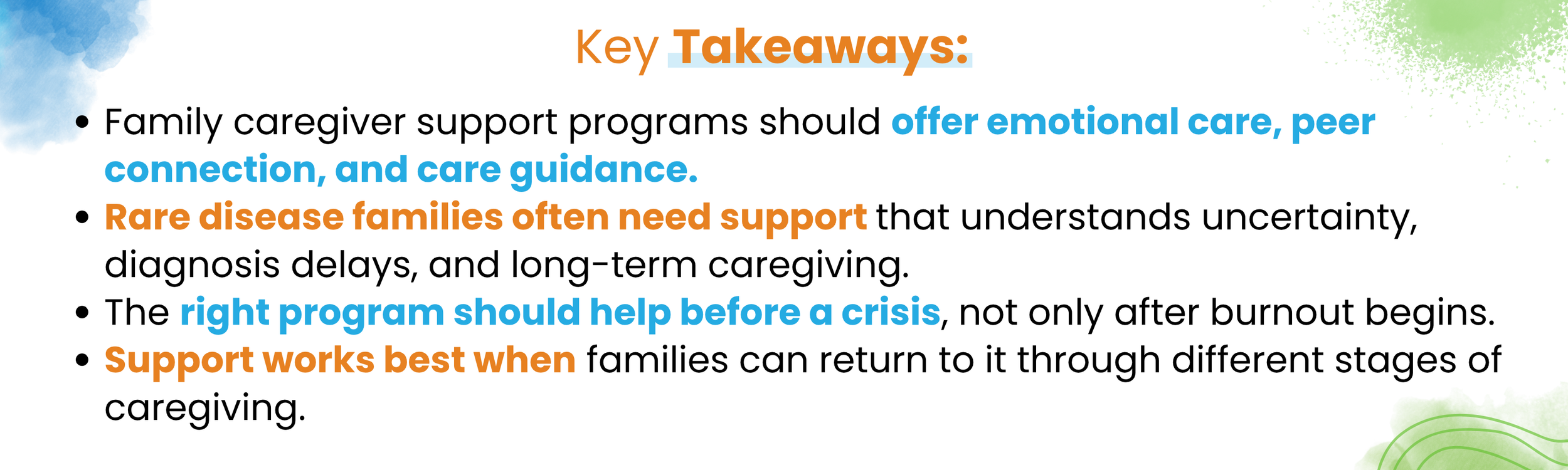
That's why choosing the right family caregiver support program isn't about waiting until burnout takes over. It's about building a support system that grows with your family's journey. One that helps you feel understood, connected, and supported long before you reach a crisis.
Keep reading to learn what to look for in a family caregiver support program and how to choose one that fits your family's needs.
Why Rare Disease Families Need Different Types of Support
Rare disease caregiving is different from short-term caregiving because the questions often keep changing. A family may spend years searching for a diagnosis, then move into treatment decisions, care coordination, school planning, insurance appeals, and daily symptom management.
And because many rare conditions are not widely understood, caregivers may become the people who explain the condition to others. As a caregiver, you may be learning medical terms, tracking small changes, and helping professionals understand what your loved one needs.
According to Rare Diseases International, rare diseases affect an estimated 300 million people worldwide. That number shows how many families may be carrying complicated needs, even when each condition affects a small group of people.
The Five Types of Family Caregiver Support Programs
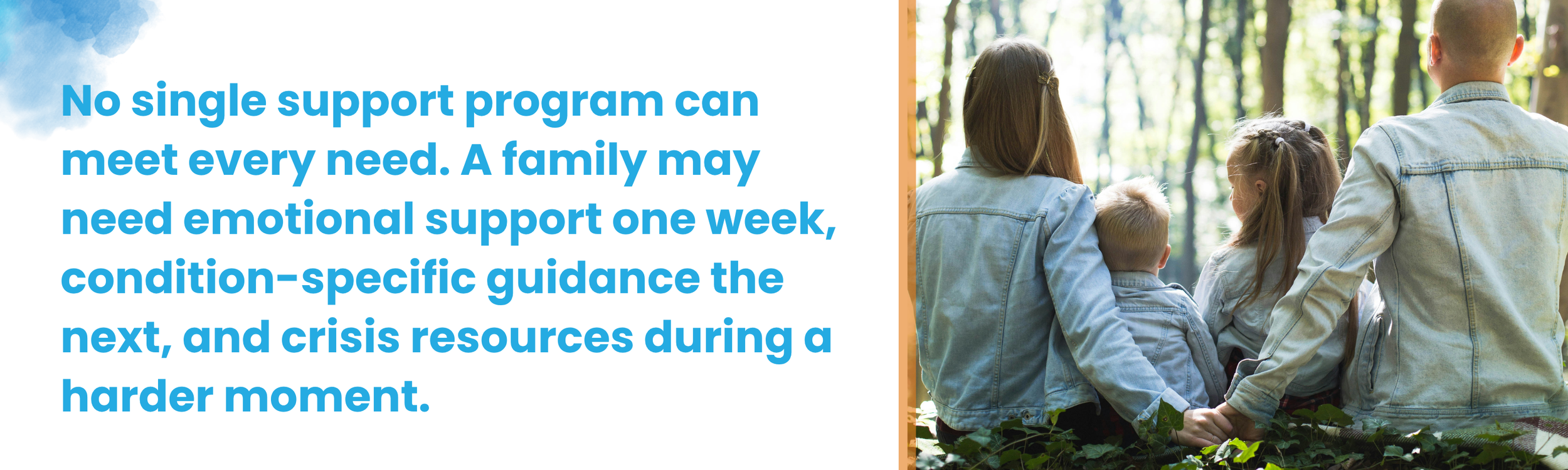
A strong support system often includes different kinds of help, not one perfect answer. As a caregiver, it can help to know what each option offers before choosing where to start.
1. Peer Support Groups
Peer support groups connect caregivers with people who understand the emotional weight of caregiving. These groups can help you feel less alone because the support comes from shared lived experience.
Online groups can also make support easier to access when time, travel, or care needs make in-person meetings difficult. Raregivers’ Weekly Support Groups offer ongoing spaces for caregivers seeking peer connection and emotional support.
2. Emotional Wellness Programs
Emotional wellness programs focus on stress, resilience, reflection, and mental wellbeing. They can help you name what you are carrying, especially when caregiving starts affecting sleep, patience, focus, or identity.
These programs matter because support should not wait until you feel completely depleted. However, they work best when they feel safe, accessible, and grounded in real caregiver experiences.
3. Crisis Support
Crisis support is for moments when the emotional pressure feels too heavy to carry alone. It may include crisis lines, urgent mental health support, or connection to trained responders.
Not every caregiver support program is built for crisis care, and that is important to understand early. A good support plan should include regular support and a clear crisis option for harder moments.
If you’re feeling overwhelmed, anxious, depressed, or having thoughts of harming yourself, you’re not alone. Help is available right now. Text RARE (EN) or RARAS (ES) to 741741 to connect immediately with a trained crisis counselor who will listen and support you through what you’re feeling.
4. Disease-Specific Organizations
Disease-specific organizations can offer education, advocacy, research updates, and care guidance that general caregiver groups may not provide. For rare disease families, that kind of knowledge can make a real difference.
A disease-specific community may understand symptoms, treatment questions, specialist referrals, or school accommodations. Plus, it can help you ask better questions during medical and care planning conversations.
5. Caregiver Resource Programs
Caregiver resource programs can include financial guidance, respite information, insurance navigation, school support, and healthcare coordination tools. These resources may not feel emotional at first, but they can reduce stress in daily life.
Questions to Ask Before Joining a Support Program
The best caregiver support program is the one that meets you where you are. Before joining, think about what would help you feel more understood, connected, and supported. Not every group is the right fit for every family, and your needs may change as your caregiving journey evolves.
A helpful program should answer questions like:
Do I feel emotionally safe here?
Do members understand rare disease caregiving?
Is the program evidence-informed or guided with care?
Are trained facilitators involved when needed?
Does the program offer ongoing support?
Are resources available between meetings?
Does this help before a crisis, not only during a crisis?
If the first program does not feel right, this is not a failure. It may simply mean your family needs a different kind of support, or a different starting point.
Signs You’ve Found the Right Community
The right support community does not make caregiving easy, and it should not pretend to. But it can help you feel seen, understood, and less alone while you continue carrying real responsibilities.
You may know a community is working when difficult questions feel safer to ask. You may feel less pressure to explain every detail because others already can relate to your experience.
A helpful community also encourages without judging. It gives space for honesty, care guidance, and emotional relief without making caregivers feel like they must perform strength.
If group support feels unfamiliar, learning about what happens inside a Raregivers support group can help you understand what to expect before joining.
Building Your Support System Before You Need It
Support works best when it is treated like preventative care and not just another emergency. As a caregiver, you should not have to wait until everything breaks down before seeking support.
The right support system may include peer groups, disease-specific organizations, healthcare teams, trusted family members, and professional mental health support when needed. The Emotional Journey Map can also help you recognize emotional stages and talk about support earlier. In addition, the community can help carry what information alone cannot.
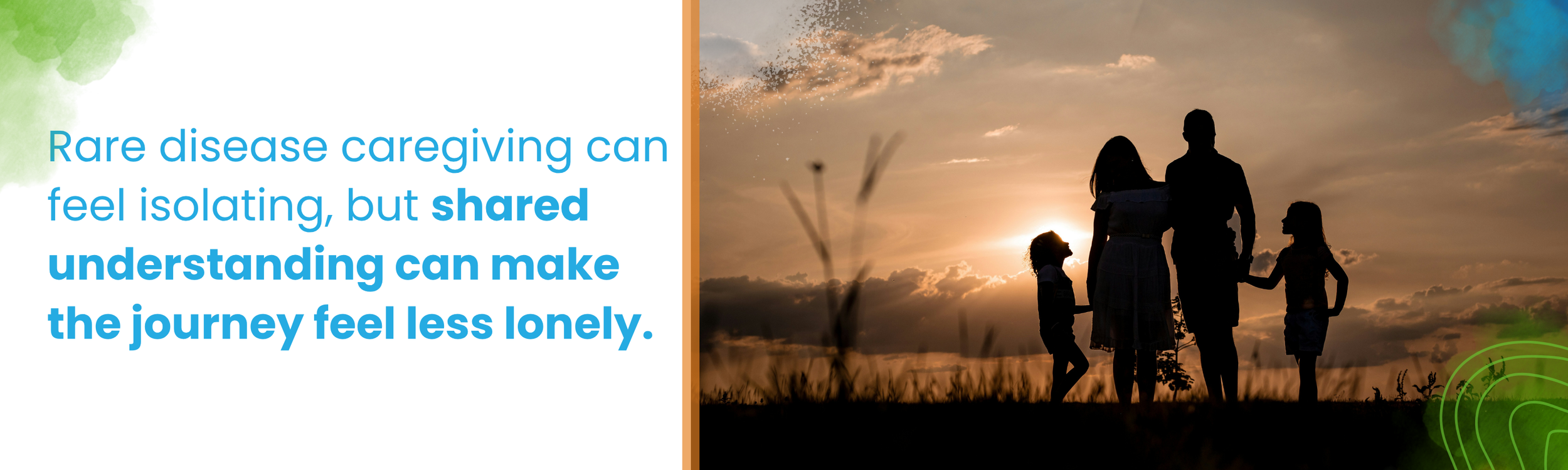
Rare disease caregiving can feel isolating, but shared understanding can make the journey feel less lonely. This is why rare disease caregiver community support can make a bigger difference, giving caregivers a place to feel understood.
FAQ: Family Caregiver Support Programs
Q: What should rare disease families look for in a support program?
Rare disease families should look for emotional safety, peer connection, disease understanding, care guidance, and ongoing support. A strong program should help before a crisis, not only during a crisis.
Q: Are online caregiver support groups useful?
Online caregiver support groups can be useful when families need flexible access to support. They can also help caregivers connect with others who understand similar emotional and care challenges.
Q: Why are disease-specific groups important?
Disease-specific groups often provide knowledge that general caregiver spaces may not have. They can help families understand symptoms, care options, advocacy needs, and specialist questions.
Support Should Be Available Before Crisis
The right caregiver support program is not always the one with the longest resource list. It is the one that helps you feel understood, connected, and supported through each stage of the caregiving journey.
For rare disease families, that kind of support is critical because caregiving can change over time. Needs may change during diagnosis, treatment, daily care, transitions, and moments of uncertainty.
And while no program can remove every challenge, the right support can make the journey feel less isolated. It can also help you ask for help earlier, build connections, and stay emotionally ready for what comes next.
Connect with caregiver support and explore Raregivers resources.
