
Why Caregivers Need Support Just As Much As Patients
Caring for someone with a rare, chronic, or complex condition is an act of deep love and commitment. It is also, quietly and often invisibly, one of the most emotionally demanding roles a person can take on.
While much of the attention in healthcare rightly focuses on the patient, caregiver emotional support is often overlooked, despite being essential to sustaining care over time.
For many caregivers, the experience can feel isolating, overwhelming, and unrelenting. Without consistent emotional support for caregivers, even the most dedicated individuals can face burnout.
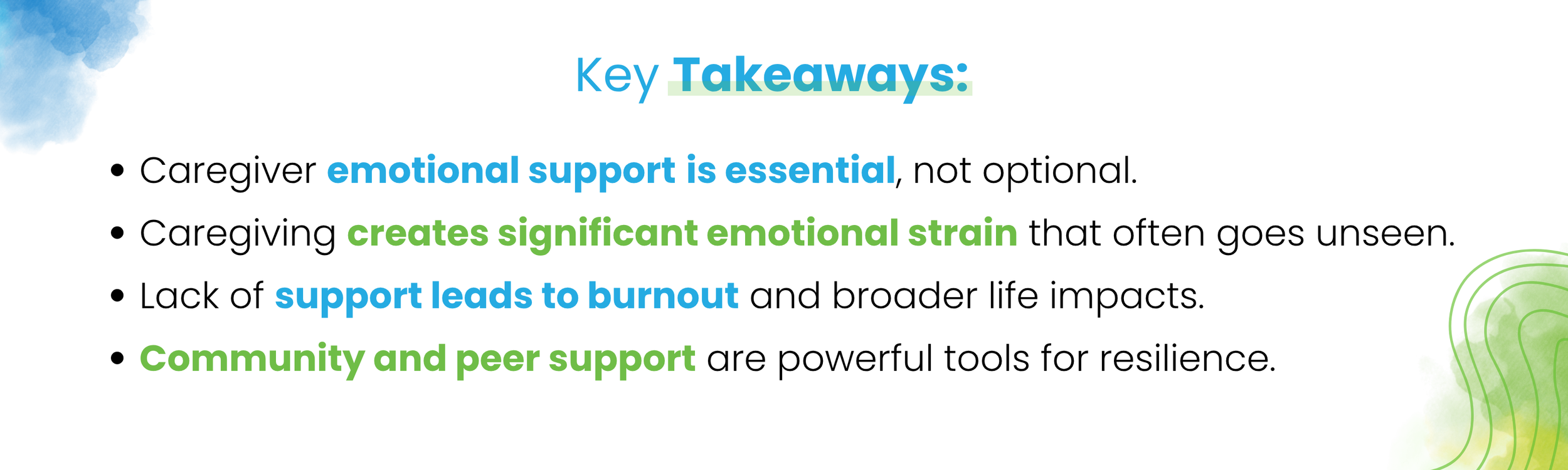
Sustainable care begins with a simple but critical truth: Caregiver emotional support is not optional. It’s foundational to both caregiver mental health and long-term care outcomes.
The Emotional Reality of Caregiving
#1: Constant Responsibility and Uncertainty
Caregiving is not a role that can be easily set aside. It often requires round-the-clock vigilance, decision-making, and emotional presence.
For those providing support to rare disease caregivers, uncertainty adds another layer of complexity. There is uncertainty about diagnoses, treatments, progression, and outcomes.
This constant state of alertness can place a significant strain on a caregiver's mental health. Caregivers may feel like they are always "on," with little time or space to process their own emotions or access meaningful caregiver emotional support.
#2: The Impact of Long-Term Stress and Burnout
Over time, this sustained pressure can take a toll. Caregiver burnout is not simply fatigue. It is a state of emotional, mental, and physical exhaustion caused by prolonged stress and lack of caregiver emotional support.
Caregivers may experience:
Persistent anxiety or worry
Feelings of overwhelm or helplessness
Difficulty sleeping or concentrating
Emotional numbness or irritability
These are not signs of weakness. They are natural responses when a caregiver's mental health is strained, and caregiver emotional support is limited or unavailable.
Why Caregiver Support Is Often Overlooked
#1: Focus on Patient Care Over Caregiver Well-being
Healthcare systems are primarily designed around patient outcomes. While this focus is essential, it often excludes caregiver emotional support from formal care plans.
Rare disease caregiver support systems frequently prioritize clinical needs over caregiver mental health.
This gap means many caregivers are left to manage emotional stress on their own, without structured caregiver emotional support.
#2: Social Expectations and the Silent Burden
Caregiving is often seen as a responsibility, something you do for a loved one. This expectation can make it difficult for caregivers to express their struggles or ask for caregiver emotional support.
Many caregivers feel they must stay strong, positive, and selfless at all times. As a result, their caregiver mental health needs remain unspoken and unaddressed.
The Consequences of Unsupported Caregiving
#1: Emotional Exhaustion and Burnout
When caregiver emotional support is missing, emotional strain can accumulate quickly. Over time, this leads to deep exhaustion and burnout, affecting both the caregiver's mental health and the ability to continue providing care.
Burnout does not just affect the caregiver. It can affect the quality and sustainability of care, underscoring the importance of caregiver emotional support in any care ecosystem.
#2: Effects on Physical Health and Relationships
The emotional demands of caregiving often spill into other areas of life. Without adequate caregiver emotional support, caregivers may neglect their own health, delay medical care, or experience chronic fatigue.
Relationships can also be affected. Strain, isolation, and lack of time can impact connections with partners, family members, and friends.
Strong, rare disease caregiver support systems can help reduce this isolation and improve overall caregiver mental health.
The Power of Community and Shared Experience
#1: Benefits of Peer Support Groups
One of the most effective forms of caregiver emotional support is connection with others who understand the experience firsthand.
Peer support groups are a vital part of rare disease caregiver support and play a key role in protecting caregiver mental health.
Peer support groups offer:
A space to share openly without judgment
Validation of emotions and experiences
Practical insights from others navigating similar challenges
A sense of belonging and understanding
For those providing rare disease caregiver support, these connections can reduce isolation and strengthen emotional resilience.
#2: Connection as a Form of Emotional Relief
Simply knowing you are not alone can be transformative. Community is a powerful form of emotional support for caregivers, helping them feel seen and understood.
Connection is not just comforting. It supports caregiver mental health by reducing stress, improving emotional well-being, and fostering resilience over time.
Building Sustainable Support Systems
#1: Accessing Caregiver Resources
Support can take many forms, and accessing emotional support from caregivers is essential for long-term well-being.
Caregivers can explore:
Peer support groups, both virtual and in-person
Counseling or mental health services to support caregiver mental health
Educational tools designed for rare disease caregiver support
Respite care to allow time for rest and recovery
Exploring resources through Raregivers can be a meaningful first step toward finding consistent emotional support from caregivers.
#2: Encouraging Open Conversations and Advocacy
Sustainable rare disease caregiver support requires open conversations about caregiver mental health. Caregivers deserve space to express their needs, challenges, and emotions without stigma.
Advocating for caregiver emotional support within families, communities, and healthcare systems helps ensure that caregiver mental health becomes part of the care conversation.
Frequently Asked Questions About Caregiver Support
What is caregiver burnout?
Caregiver burnout is a state of emotional, mental, and physical exhaustion caused by prolonged caregiving stress and lack of caregiver emotional support. It often includes feelings of overwhelm, fatigue, and reduced coping ability.
How do support groups help caregivers?
Support groups provide caregiver emotional support by offering a safe space to share experiences, receive validation, and connect with others. They are an important part of caregiver support for rare diseases and can significantly improve caregivers' mental health.
Where can caregivers find help?
Caregivers can find emotional support through organizations like Raregivers, local support groups, healthcare providers, and online communities focused on rare disease caregiving and caregiver mental health.
You’re Not Meant to Do This Alone
Caregiving is essential, but it is not meant to be carried alone. Caregiver emotional support directly improves caregiver mental health and strengthens outcomes for both caregivers and those they care for.
If you are a caregiver, your emotional experience is valid. You deserve caregiver emotional support, connection, and care.
Explore support resources and connect with others who understand through the Raregivers community.
