
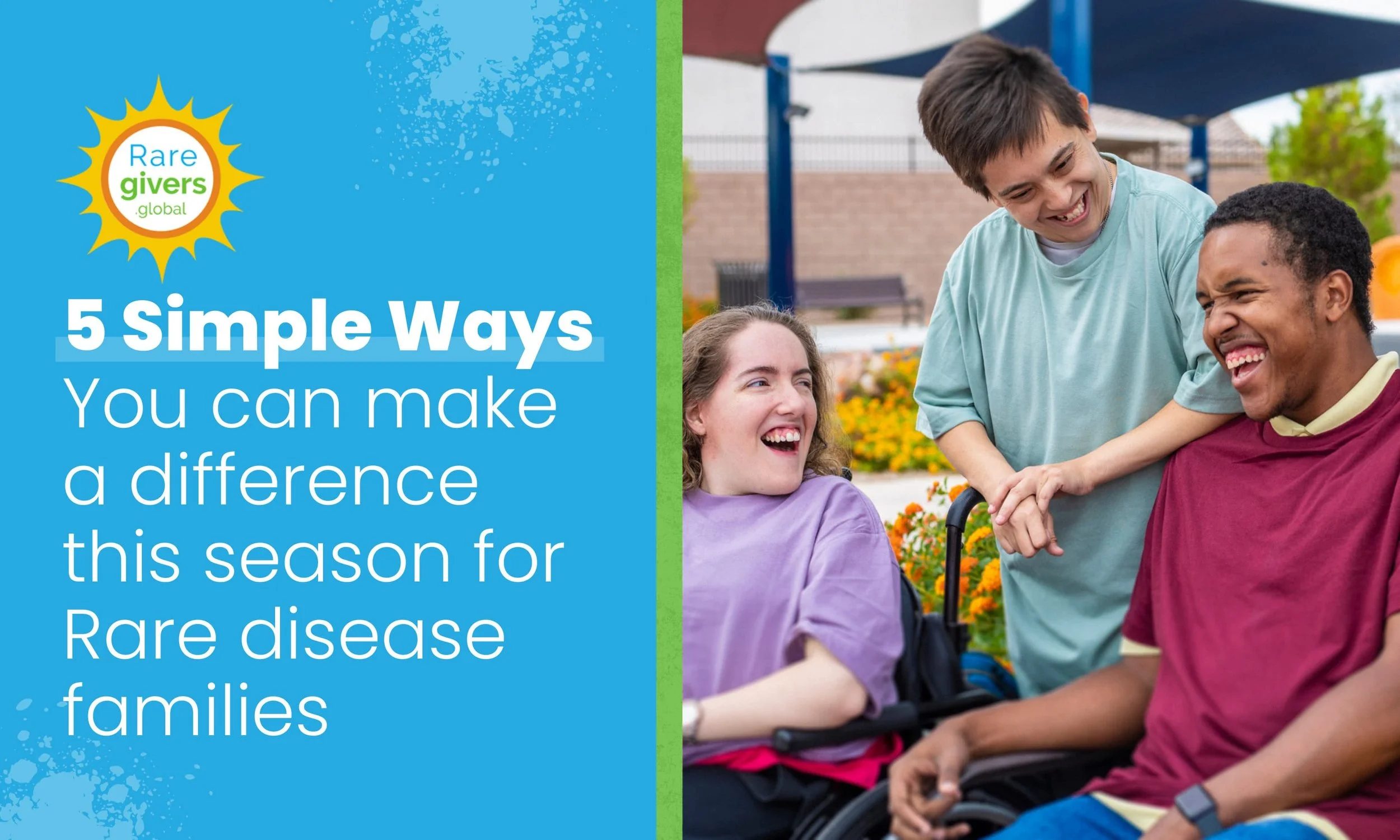
5 Simple Ways You Can Make a Difference This Season for Rare Disease Families
The holidays are a season of togetherness. Meals shared, traditions honored, and customs passed from one generation to the next. But for many families living with rare diseases, this time of year can feel complicated.
Alongside the lights and celebrations, there can be long drives to specialist appointments, medical bills that don’t pause for festivities, and the quiet emotional weight of caregiving that rarely gets a day off.
If you’ve ever wondered whether your support truly matters, here’s the good news: small, thoughtful actions can create real relief. Holiday giving isn’t all about dramatic gestures: It’s about consistent, human support that tells rare disease families, “You are not alone.”
Below are five simple ways to make an impact this season, whether you’re a donor, a Raregivers community member, a first-time volunteer, or someone who simply wants to support rare disease families with purpose.
#1) Make a Holiday Gift That Creates Year-Round Relief
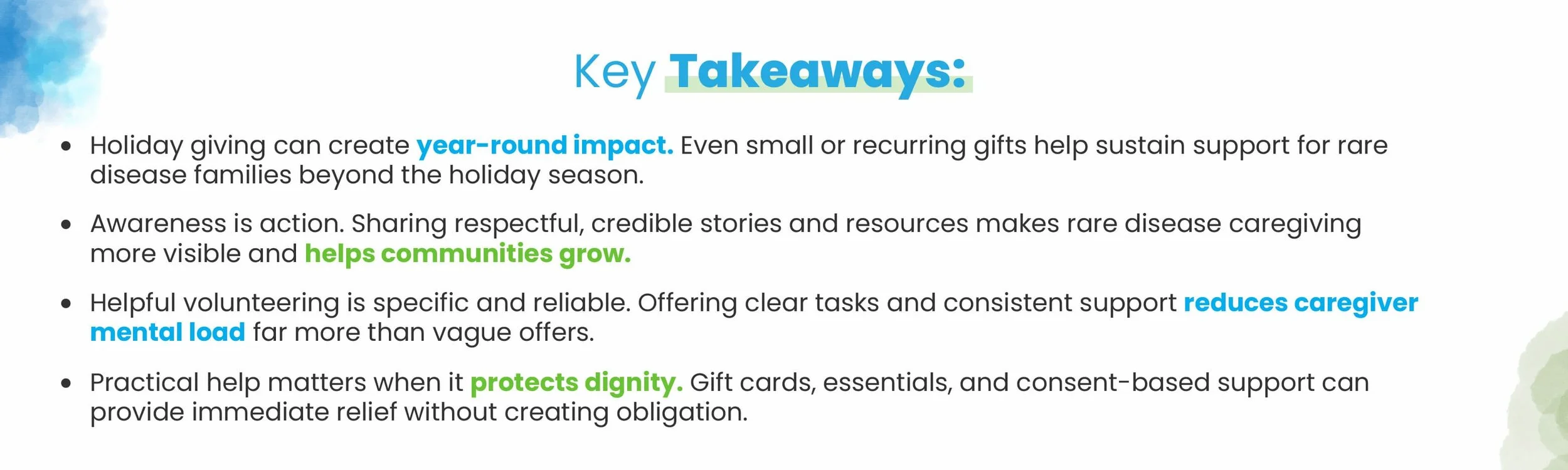
When you donate to rare disease research, you are not just giving a one-time gift. You are investing in support systems that can carry families through the hardest days of the year.
Rare disease families often juggle specialist care, complex treatment plans, advocacy for school accommodations, and the emotional labor of explaining their child’s needs again and again. The need does not end when the holiday decorations come down.
Holiday giving becomes especially powerful when directed to organizations that prioritize caregiver wellbeing, community connection, and evidence-based tools that help families feel seen and supported.
If you want your donation to feel personal, consider:
Making a gift in honor of a rare disease caregiver or child.
Setting up a recurring monthly donation (even small amounts add stability).
Inviting others to match your gift as part of a holiday challenge.
This season, your generosity can help create breathing room financially, emotionally, and practically.
#2) Share Stories That Expand Awareness Without Exploiting Pain
One of the most overlooked ways to support rare disease families is also one of the simplest: using your voice to make their reality more visible.
Rare diseases are often isolating. Many families spend months and even years seeking a diagnosis. Even after they receive one, they may struggle to find local support, knowledgeable providers, or anyone who truly understands.
You can make an impact by sharing credible, respectful content that educates without sensationalizing. Try:
Posting a Raregivers story or resource and adding a short note: “If you have never heard of rare disease caregiving, this is worth your time.”
Sharing a caregiver-created message about what support actually looks like.
Using your social channels to point people toward practical actions, not pity.
When awareness grows, so do resources, research attention, and community support. For families who feel invisible, simply being seen can provide relief.
#3) Volunteer in a Way That Actually Helps
Many want to volunteer, but rare disease caregivers often have plenty of ideas already. What they truly need is reliable, specific support.
If you’re looking to make an impact, consider volunteering in ways that reduce mental load.
Examples include:
Offering a defined task (not “Let me know if you need anything,” but “I can drop off dinner on Tuesday.”)
Supporting admin work for a rare disease nonprofit: writing, design, email support, event help, and fundraising coordination.
Becoming a consistent helper for a family (one hour every two weeks can be more valuable than one big day).
If you’re part of the Raregivers community, this can also look like being a connector. Welcome someone new, share a resource, or offer to listen without trying to fix everything.
The most meaningful volunteer support is straightforward, dependable, and humble. It says: “I am here, and you don’t have to carry this alone.”
#4) Start a Holiday Giving Circle With Friends, Family, or Coworkers
Want a way to multiply your impact without doing it all yourself? Create a small giving circle.
A giving circle can be as simple as:
A group text with friends
A workplace Slack channel
A neighborhood email list
A family holiday gathering
Pick one focus, like “support rare disease families,” and invite everyone to contribute what they can. Then choose a concrete outcome:
Fund a program
Sponsor caregiver resources
Support a campaign
The magic here isn’t just the money. It’s the ripple effect of awareness and shared commitment.
When people give together, they’re more likely to keep giving and stay connected to the cause beyond a single season.
If you want a meaningful place to start, explore #Raregivers100, our unique effort to highlight the experiences of rare disease caregivers and the realities they face.
#5) Give Practical Support That Respects Dignity
Not every form of holiday giving requires a donation. Sometimes, the most immediate way to support families affected by rare diseases is to meet practical needs while protecting their dignity and autonomy.
Caregiving can make everyday holiday tasks feel overwhelming. Consider offering:
Gift cards for groceries, gas, meal delivery, or pharmacies.
A “quiet help” drop-off with paper goods, snacks, and household essentials.
Help with seasonal logistics like wrapping gifts, decorating, or organizing.
A care package designed for the caregiver, not only the child: cozy socks, tea, a journal, and comfort items.
If you are supporting someone you know, the key is consent and specificity:
“Would a grocery gift card be useful right now?”
“Do you prefer no-contact drop-off?”
“Would you rather I help with errands or meals?”
Support should never create obligation. The best help feels like a soft landing, not a social debt.
A Season for More Than Generosity
Rare disease families don’t need to be inspirational to deserve care. They don’t need to educate the world while carrying everything by themselves. And they certainly don’t need to wait for Rare Disease Day or Rare Disease Month to receive support.
This season, there are meaningful ways to make a difference: through holiday giving, volunteering, sharing stories, building community, and choosing support that lasts long after the celebrations fade.
If you’ve been waiting for a sign that your actions matter, this is it. Small, simple gestures of support can create real impact. When enough people do a little, rare disease families feel it as a lot.
Whether you donate to rare diseases, volunteer your skills, or invite your circle to join you, your support becomes part of a bigger message.
To learn more and share caregiver stories this season, visit #Raregivers100.
