
Why Community Matters for Families Affected by Rare Diseases
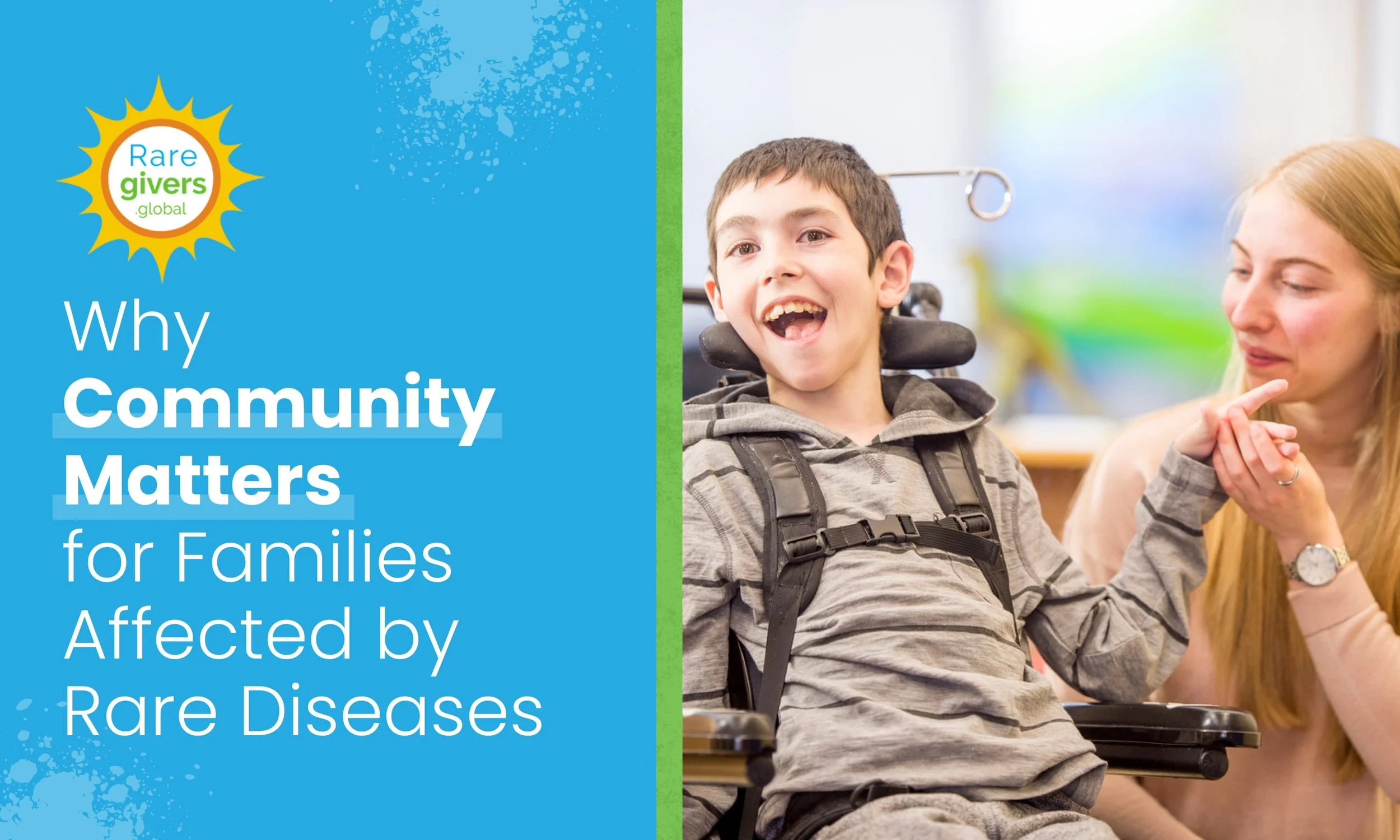
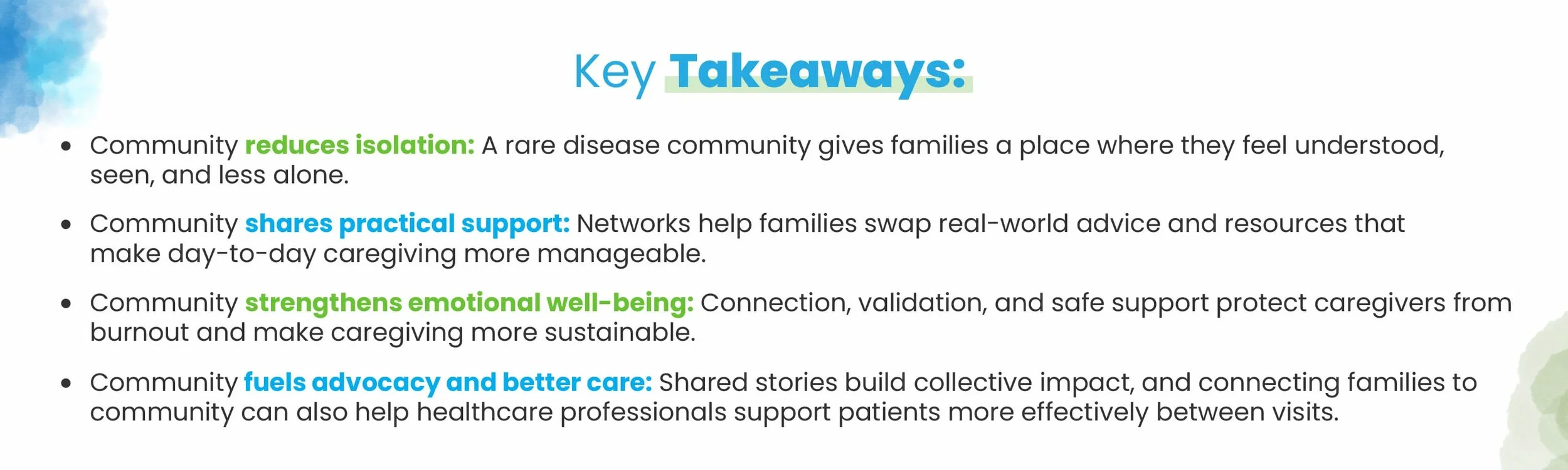
Rare diseases can leave families feeling isolated. Care is complex, systems are confusing, and the emotional load is heavy. Community changes that.
A strong rare disease community not only offers comfort but also provides support. It becomes a practical lifeline, an emotional anchor, and an advocacy engine that helps families move from surviving to being supported.
That’s why, in this article, we’ll explore why community building is essential for families affected by rare diseases, what meaningful support looks like, and how networks like Raregivers can help turn isolation into connection and action.
Rare disease life can be lonely. Community makes it livable.
Medically caring for those with rare diseases isn’t the only complexity involved. The feeling that nobody truly understands what your daily life requires can also be a tremendous burden to cope with.
Even with loving friends and family around, rare disease parents and caregivers often find themselves repeatedly explaining why a symptom is scary, why routines require constant planning, and why the emotional toll can be so high.
A rare disease community removes the need to translate your reality. It creates space for your experience to be understood without a long introduction.
You can finally exhale and hear, “Yes, me too.” That kind of belonging isn’t a“bonus” – it’s genuine support.
Community reduces overwhelm by sharing real-world knowledge.
When you’re supporting rare diseases in a real household, information is not theoretical. It’s survival.
Community helps families exchange lived expertise, such as:
Practical tips for appointments, insurance, school planning, and care coordination.
Scripts for challenging conversations with providers, teachers, or loved ones.
Resource recommendations, including tools, organizations, specialists, and grants.
“What I wish I knew earlier” guidance from someone a few steps ahead.
This is how community building becomes a force multiplier. No single person can know everything…but a network can.
Emotional support is not fluff. It’s fuel.
Caregiving can hold two truths at once. Fierce love and profound exhaustion. Hope and grief. Pride and isolation. Families affected by rare diseases often carry emotional duality every day.
Feeling strong and depleted at the same time is common, and that can be hard to spot. But a supportive community provides:
Validation that your feelings make sense.
Permission to not be okay.
Encouragement that does not minimize reality.
A connection that helps you keep going.
This matters because burnout isn’t always dramatic. It can disguise itself as numbness, disconnection, or “running on fumes.”
Community is protective. It picks you up, gives you something to lean on, when your own strength starts to fail.
Shared identity turns isolation into advocacy.
Many people first seek out a rare disease community for support. Then something powerful happens: Support becomes voice.
In the community, families realize they’re not alone and see that their combined story carries weight.
This is how awareness grows and how systems shift. Advocacy becomes possible when people move together.
For people interested in advocacy or nonprofit supporters, community is where momentum starts:
Stories become patterns.
Patterns become evidence.
Evidence becomes action.
A connected, community-oriented network such as Raregivers can build louder, faster, more credible awareness than individuals fighting separately.
Community helps healthcare professionals deliver better care.
If you’re a healthcare professional, the community might not be the first thing you consider when providing care.
But families affected by rare diseases live with ongoing stress, uncertainty, complicated logistics, and emotional strain that can shape decisions and outcomes, and connecting families to a trusted rare disease community can:
Improve caregiver coping and confidence.
Reduce isolation, which is a risk factor for poor well-being.
Increase follow-through because families feel supported between visits.
Strengthen communication by helping caregivers clarify needs and priorities.
Community does not replace medical care. It supports what happens in between.
What a healthy rare disease community looks like.
Not all communities are the same. A supportive rare disease community is not just a forum…it’s a culture.
Look for communities that practice:
Belonging without gatekeeping.
Evidence-backed guidance and reliable resources.
Emotional safety, boundaries, and mutual respect.
Whole family support, including caregiver wellbeing.
Pathways to action, so support can also become advocacy.
The goal is not simply connection. The goal is a sustainable connection that actually helps.
The Raregivers community: Built with purpose.
At Raregivers, our mission is to make caregiving visible, sustainable, and supported. Families should not have to deal with rare diseases alone.
The Raregivers community is built for:
Current members who need ongoing support and connection.
Potential members who are searching for a trusted community.
People ready to advocate and create change.
Supporters invested in caregiver wellbeing.
Healthcare professionals who want to connect families to meaningful resources.
Community building is not extra. It is strategy, care, and impact.
If you’re looking for your people, start here.
If you’re carrying rare disease caregiving right now, you deserve support that understands the emotional and practical reality of the journey.
If you’re a supporter or professional, you can help by pointing families toward trusted networks and reinforcing that community is part of a sustainable caregiving plan.
Rare diseases aren’t rare, and no family should navigate them alone.
Feel free to get in touch. We would love to welcome you.
