
Signs and Symptoms of Caregiver Burnout: When Caregiving Changes Who You Are
Caregiver burnout can slowly affect how you think, feel, connect, and see yourself. Recognizing the signs and symptoms of caregiver burnout can help you seek support before reaching crisis.
Burnout doesn’t always begin with one clear breaking point. Sometimes, it starts with missed meals, restless nights, canceled plans, or another responsibility added to an already demanding day.
Over time, those changes can affect how you think, feel, and connect with others. You may become irritable, withdrawn, forgetful, or emotionally distant. You might also struggle to remember who you were before caregiving became central to your life.
Because burnout develops gradually, many caregivers dismiss the signs as part of caregiving. However, recognizing them isn’t an admission of failure. It’s the first step toward finding support before emotional depletion becomes a crisis.
Keep reading to understand what caregiver burnout can look like and what you can do when the signs feel familiar
What Is Caregiver Burnout?
Caregiver burnout is ongoing physical, mental, and emotional exhaustion caused by prolonged caregiving demands. It often develops when responsibilities continue to exceed the support, rest, and resources available.
Burnout doesn't just affect your energy. It can influence your mood, motivation, health, relationships, confidence, and sense of identity.
According to the Family Caregiver Alliance, caregivers can experience increased stress, anxiety, depression, and other health concerns.
However, burnout doesn’t reflect how much you love the person receiving care. You can remain deeply committed while also feeling emotionally and physically depleted.
How Is Caregiver Burnout Different From Everyday Stress?
Daily stress often relates to a temporary situation. It may ease when the problem passes, responsibilities decrease, or you get enough rest.
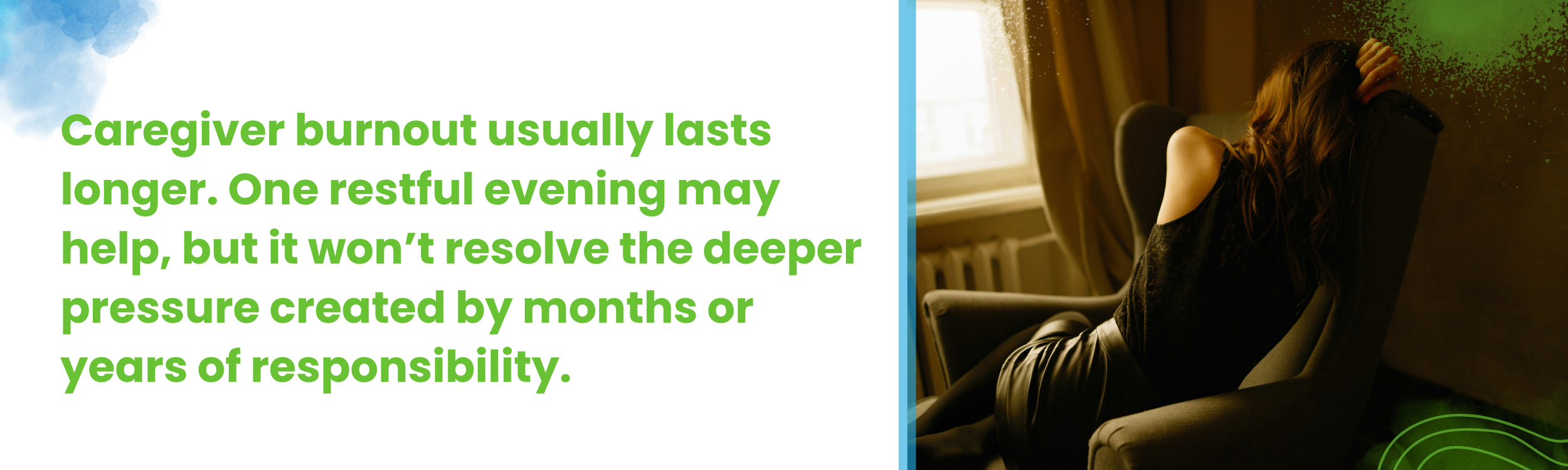
Several differences may indicate that stress is becoming burnout:
Stress creates urgency, while burnout reduces motivation.
It may improve after rest, while burnout often remains.
It can make you alert, while burnout may create numbness.
It affects difficult moments, while burnout can affect your identity.
Caregiver stress also deserves attention before it develops into burnout. Support shouldn’t begin only after someone reaches a crisis.
Signs and Symptoms of Caregiver Burnout
Caregiver burnout symptoms can appear emotionally, physically, mentally, and socially. Here are several signs to watch for.
#1. Constant exhaustion
You may feel tired after sleeping or struggle to recover between demanding days. Even simple tasks can begin requiring unusual effort.
You might also experience headaches, muscle tension, disrupted sleep, or frequent illness.
#2. Irritability or impatience
Small inconveniences may begin feeling unbearable. You might become frustrated with relatives, professionals, friends, or the person receiving care.
Irritability doesn’t mean you’ve stopped caring. It may indicate that your emotional capacity has been stretched for too long.
#3. Emotional numbness
Burnout doesn’t always feel like intense distress. Sometimes, it feels like completing daily responsibilities without being emotionally present.
Activities that once brought comfort or happiness may also feel distant or unimportant.
#4. Feeling overwhelmed
Caregiving can create a continuous list of appointments, decisions, paperwork, and concerns. Eventually, one additional request may feel impossible to manage.
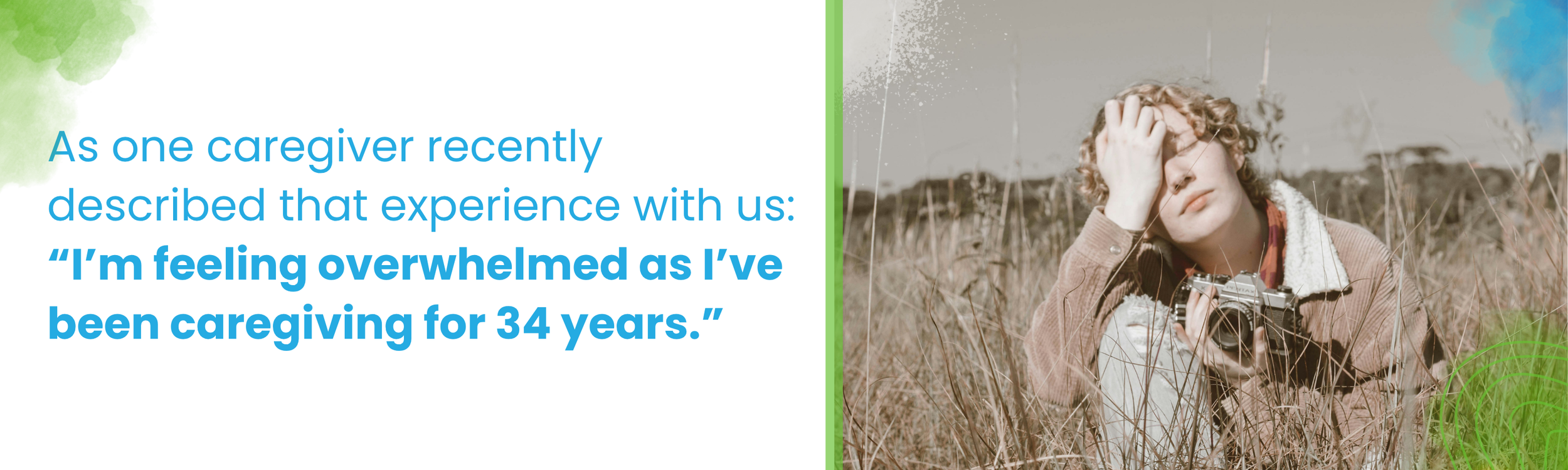
Long-term caregiving can build pressure across years or decades. Without reliable support, that burden becomes increasingly difficult to carry alone.
#5. Difficulty concentrating
You may forget appointments, lose track of conversations, or struggle with decisions. Tasks that once felt manageable may begin taking much longer.
Forgetfulness isn’t necessarily carelessness. It may signal that your mind is carrying too many responsibilities.
#6. Withdrawing from others
This is a significant one. You may stop answering messages, attending gatherings, or sharing how you feel. Explaining rare disease caregiving repeatedly can also become exhausting.
However, isolation can increase when caregivers don’t have spaces where their experiences are understood.
#7. Losing interest in yourself
Hobbies, friendships, goals, and personal routines may gradually disappear. At first, these sacrifices can feel temporary or necessary.
Over time, you may realize that caregiving has replaced almost every other part of your life.
#8. Guilt about resting
You may feel guilty for wanting time alone, enjoying yourself, or asking someone else to help.
However, needing rest isn’t selfish. No one can provide continuous care without receiving support themselves.
When Caregiving Changes Who You Are
Caregiving often begins as one part of your identity. You’re still a parent, partner, friend, professional, sibling, or community member.
However, increasing responsibilities can gradually push those identities aside. Medical research replaces rest, appointments replace personal plans, and advocacy becomes part of daily life.
The Raregivers Emotional Journey Map shows how caregiving can move through changing stages. Early concerns may develop into diagnosis, shifting responsibilities, and full-time care.
Each stage requires emotional adjustment, yet caregivers aren’t always given enough time or support to process those changes.
Caregiver identity loss
Caregiver identity loss can happen when caregiving responsibilities begin replacing your personal relationships, interests, and goals.
You may think:
“I don’t know what I enjoy anymore.”
“Everything revolves around caregiving.”
“People only ask about the person I care for.”
“I feel guilty whenever I do something for myself.”
These thoughts don’t mean you regret caring for your family member. They may mean your own identity and emotional needs have remained unsupported.
Changing family roles can also create invisible grief. You may grieve a relationship, career, routine, future, or freedom you expected.
That grief doesn’t reduce your love. It acknowledges that caregiving can involve significant and continuing losses.
Why Rare Disease Caregiving Increases Burnout Risk
Every caregiver can experience burnout. However, rare disease caregiving includes several risks that can increase emotional depletion.
Chronic uncertainty
Rare conditions may involve unclear symptoms, limited treatment options, and uncertain progression. Caregivers often make important decisions without knowing what comes next.
Even during calmer periods, you may anticipate another symptom, appointment, denial, or change in care needs.
Medical complexity
Rare disease caregivers may coordinate medication, therapy, equipment, insurance, education, appointments, and emergency planning.
Many responsibilities require specialist knowledge, yet families often receive limited training or assistance.
Advocacy fatigue
Caregivers frequently advocate across healthcare, education, insurance, employment, and public services.
Repeatedly requesting necessary care can become exhausting, especially when families must continually explain or prove their needs.
Emotional isolation
Few people may understand the condition or the uncertainty surrounding it. Local caregiver groups may not reflect the family’s specific experiences.
According to the National Alliance for Caregiving, one in four family caregivers experiences isolation, while many report moderate or high emotional stress.
As another caregiver recently shared with us:
“Just want to connect and make friends that understand.”
Connection won’t remove caregiving responsibilities. However, it can provide a place where caregivers don’t need to explain every experience.
What to Do If These Signs Feel Familiar
Recognizing burnout may feel uncomfortable, especially when someone else depends on you. However, support isn't reserved for emergencies.
Here are several steps that can help:
Name what has changed. Consider your sleep, mood, energy, concentration, relationships, and identity.
Tell someone you're struggling. Speak with a trusted person, counsellor, or healthcare professional.
Share one responsibility. Ask someone to handle a meal, phone call, appointment, or household task.
Reconnect with yourself. Return to one activity, relationship, or routine that belongs to you.
Prioritize your emotional wellbeing. Small, consistent habits can help protect your resilience over time. You can also explore practical strategies for protecting your mental health as a caregiver.
Frequently Asked Questions About Caregiver Burnout
1. What are the first signs of caregiver burnout?
Early signs include constant tiredness, irritability, poor concentration, withdrawal, disrupted sleep, and losing interest in personal activities.
2. Can caregiving change your identity?
Yes. Long-term responsibilities can replace hobbies, relationships, goals, and routines. However, caregiver identity loss can improve when support creates space for your needs.
3. Is caregiver burnout a personal failure?
No. Burnout often develops when prolonged responsibilities exceed the support and rest available. Recognizing it shows awareness, not weakness.
Recognizing Burnout Is the First Step
Caregiver burnout doesn’t mean you’ve failed. It often means you’ve carried too much responsibility without enough support. Recognizing the signs and symptoms of caregiver burnout creates an opportunity to respond earlier.
You can ask for help, reconnect with yourself, and find people who understand.
You don’t need to wait until you’re emotionally depleted to seek connection.
Raregivers Weekly Support Groups offer Rare Mothers, Rare Fathers, and family caregivers a place to be heard, supported, and understood, before burnout becomes a crisis.
