
How Caregivers Can Protect Their Mental Health
“One of the biggest challenges of being a ‘rare caregiver’ is the unpredictability,” says Shari Bailey, mother to her daughter Laila, who was diagnosed at birth with Jacobsen syndrome.
“While our family worked hard to navigate the complexities that came with her diagnosis and to help her overcome the odds, one thing I was not fully prepared for was the unexpected.”
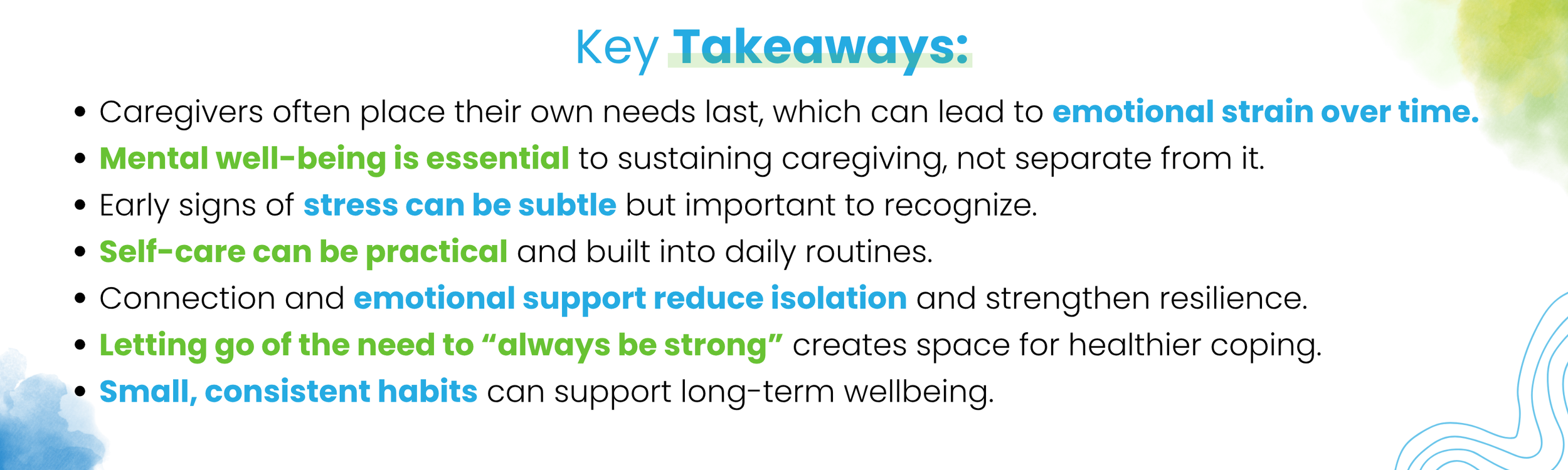
Caregiving often asks for everything, and over time, it can quietly shift priorities in a way that leaves very little room for anything else.
More often than not, caregivers find themselves placing their own needs at the end of the list, not because they do not matter, but because there is always something more urgent to attend to. Appointments, decisions, advocacy, and emotional support begin to take up most of the available space.
That pattern can feel necessary in the moment, especially when a loved one's needs are ongoing or unpredictable. But over time, it becomes difficult to sustain without support.
For caregivers navigating rare, chronic, and complex conditions, this experience can feel even more intense. The responsibility is not only constant but also often requires managing uncertainty, coordinating across systems, and holding emotional space at the same time.
Protecting your mental health is never different from caregiving. It’s part of what allows you to continue showing up in a way that feels steady, present, and manageable.
Caregiver self-care is not about stepping away from responsibility. It is about creating enough emotional stability to continue supporting someone else without becoming depleted yourself.
Why Caregivers Struggle to Prioritize Their Own Well-being
Caregivers rarely decide to put themselves last. It tends to happen gradually, shaped by responsibility, urgency, and the instinct to respond to what feels most immediate.
When someone depends on you, stepping back can feel difficult, even for a short period of time. There is often a sense that something always needs attention, which makes it harder to recognize when your own needs require space.
Many caregivers also experience guilt when thinking about rest or personal time. It can feel as though focusing on yourself takes something away from the person you are supporting, even when that is not the case.
Over time, this combination of responsibility and internal pressure creates a pattern that becomes difficult to maintain without adjustment. That is why caregiver mental wellness requires ongoing attention rather than waiting until stress reaches a breaking point.
The Link Between Mental Health and Sustainable Caregiving
“It became clear that I needed additional help and support when members of Laila’s local care team would often say, ‘we are learning from you,’” remembers Bailey.
“While that may sound like a compliment in some settings, it is incredibly overwhelming and even frightening for a parent who is searching for answers for their child living with a rare condition.”

Mental well-being shapes how caregiving is experienced each day.
When emotional strain builds without space to process it, it can affect focus, patience, and the ability to respond to challenges. Tasks that once felt manageable can become heavier, and the overall experience of caregiving can shift.
Supporting your mental health does not reduce your ability to care for someone else. It strengthens your capacity to remain present, consistent, and responsive over time.
Caregiving is not only about what you provide. It is also about what enables you to continue providing support without feeling depleted.
This is where caregiver coping strategies enter the picture. Sustainable caregiving often depends on creating small moments of emotional recovery before stress accumulates beyond what feels manageable.
Recognizing When You Need Support
The need for support often develops gradually rather than all at once.
You might notice that you feel tired more often, even when you’ve had some rest. Tasks may begin to feel harder to manage, or it may take more effort to stay focused throughout the day.
Emotional responses can feel stronger, or it may become harder to engage in things that once felt familiar.
Some common signs include:
Persistent stress or emotional exhaustion.
Feeling overwhelmed or disconnected.
Difficulty focusing or making decisions.
Irritability or emotional withdrawal.
Loss of interest in activities that once felt meaningful.
Recognizing these signs is not about identifying a problem to fix immediately. It’s about becoming aware of what you are experiencing so that you can respond with care.
Practical Ways to Support Your Mental Health
Caregiver self-care does not need to be complicated or time-consuming. It works best when it fits naturally into daily life.
Some practical approaches include:
Taking short, intentional breaks during the day to reset.
Creating small routines that provide structure and predictability.
Staying connected with people who offer understanding and support.
Setting boundaries where possible, even in small ways.
Reflecting on thoughts and emotions to create clarity.
Reaching out for peer or professional support when needed.
These actions may seem simple, but their impact comes from consistency. Small steps, taken regularly, can help create a sense of stability over time.
For many caregivers, caregiver stress relief begins with allowing themselves permission to pause without guilt.
The Power of Connection and Emotional Support
Caregiving can feel isolating, particularly when experiences are difficult to explain to others.
Connection helps reduce that isolation by creating space for shared understanding. Being able to speak with someone who recognizes the emotional and practical realities of caregiving can bring a sense of relief that is difficult to find elsewhere.
Emotional support caregivers receive through peer connection often becomes one of the most meaningful forms of support because it is grounded in lived experience rather than explanation alone.
We provide that space through ourweekly support groups, where caregivers can connect with others who understand the experience.
Support doesn’t need to be immediate or overwhelming. It can begin with simply being in a space where your experience is truly understood.
Letting Go of the “Always Strong” Mindset
“When I visited the doctor in California and met his support staff and research partners, it became clear that I was not alone on this journey,” says Bailey.
“When Laila was first diagnosed, I was told there were only about 100 known cases of Jacobsen syndrome in the world, which made the experience feel incredibly isolating. Even if it was only a small number of people who truly understood the need to advance research around this condition…meeting them felt like discovering family members I had heard about but never had the chance to meet.”
Many caregivers feel an expectation to remain strong at all times, especially when others rely on them.
Over time, that expectation can make it difficult to acknowledge when something feels overwhelming or when support is needed. It can also create pressure to continue without pause, even when rest would be helpful.
Letting go of the idea that strength means managing everything independently allows for a more balanced approach. It creates room for honesty, support, and the ability to respond to challenges without carrying everything alone.
Strength can include asking for help, taking a break, or recognizing when something feels heavier than expected.
Building Sustainable Habits Over Time
Protecting your mental health is not something that happens through one decision. It develops through small, consistent actions that can be maintained over time.
Rather than focusing on large changes, it can be more effective to build habits that fit into your daily routine.
This might include regular check-ins with yourself, staying connected with supportive people, or returning to practices that help you feel grounded.
As circumstances change, these habits can adapt, creating a more flexible and sustainable approach to caregiving.
Long-term caregiver mental wellness is often built through routines that feel realistic enough to maintain even during difficult seasons.
A Broader Movement Supporting Caregiver Wellbeing
There is increasing recognition that caregiver wellbeing is an essential part of healthcare systems.
Research continues to show that caregivers face significantly higher levels of emotional strain and burnout when their own well-being is not supported alongside the needs of the person receiving care.
According to the National Alliance for Caregiving, caregivers frequently report emotional strain, with many balancing complex responsibilities over extended periods of time.
At Raregivers, this work continues through initiatives focused on emotional well-being, connection, and practical support.
Caring for Yourself Is Part of Caring for Others
Protecting your mental health is not another task to add to your caregiving list. It is part of what helps you keep going.
Sometimes, support starts with something small: stepping away for a few quiet minutes, telling the truth about how you feel, or reaching out to someone who understands the weight you have been carrying.
Those moments matter. They create room to breathe. They remind you that your needs are not secondary. They help make care more sustainable, not only for the person you love, but for you, too.
Caregivers are often expected to be strong without pause, but real strength also means knowing when support is needed. You do not have to wait until you are overwhelmed to seek connection, rest, or emotional care.
If you’re looking for ongoing support, caregiver-focused resources, and a community that understands the realities of rare disease caregiving, Raregivers is here to help you feel seen, supported, and less alone in the journey ahead.
