
Women Caregivers: The Invisible Backbone of Global Healthcare
You’d probably use the words “strong, dependable, resilient” to describe the women caregivers in your life. But how much do you know about what they’re carrying behind that strength?
Globally, women make up the majority of caregivers. In the United States alone, about 61% of caregivers are women, according to the National Alliance for Caregiving.
And for those supporting loved ones with rare, chronic, and complex conditions, that responsibility becomes even more complex, going beyond the day-to-day and into emotional support and advocacy systems that are not always built to support them.
Taking the time to understand the scale of contribution that these incredible caregivers make isn’t just about simple recognition. It’s about making sure the support around them is just as strong as the support they give.
The 82% Reality: Women at the Center of Caregiving
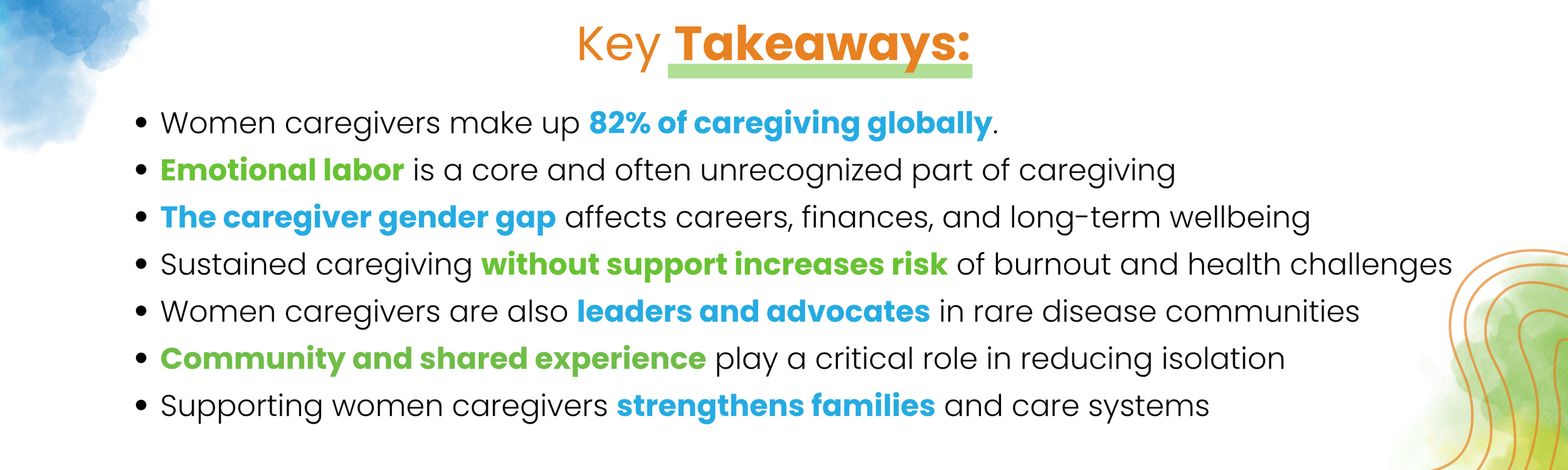
According to the UN WOMEN, women represent the majority of caregivers, often cited as making up more than 80% of caregiving roles.
And that’s no accident. Data from 2025 indicates that nearly 500,000 women left their jobs due to caregiving pressures, as those responsibilities continue to fall disproportionately on women due to cultural expectations, family dynamics, and structural gaps in healthcare and social support systems.
Women are often the ones coordinating care, managing appointments, navigating complex systems, and providing emotional and physical support, sometimes all at once.
But their contributions extend far beyond individual households. They form a critical, often unrecognized layer of global healthcare.
The Emotional Labor Behind Caregiving
Caregiving isn’t limited to a list of things to do. It’s about managing emotions, relationships, and constant decision-making.
When asked about the forms of “invisible” or emotional labor she carries as a caregiver, Michela Stevenson, a licensed marriage & family therapist who endured a difficult transition into motherhood, said it was primarily “the change of expectations and how that impacts…identity.”“As the primary caregiver, you become the ‘she-fault’ parent,” says Stevenson. “This caused me to feel like I was always getting it wrong, or having a hard time with something that was task-related, but it was the shift in identity that I wasn't expecting. The grief surrounding that was much harder to understand and access, [and] I wish that more people talked about this.”
It’s because of this reality that women caregivers often carry a mental load that includes anticipating needs, coordinating care, and holding emotional space for others, pushing their own needs aside to keep everything moving.
This kind of emotional labor is continuous. It requires attention, patience, and resilience, often without acknowledgment. It’s one of the most demanding parts of caregiving, and, as Stevenson alluded to, one of the least visible.
The Identity Impact
The impact of caregiving on women extends into nearly every part of life.
Women in caregiving roles tend to reduce their work hours, pause their careers, or step away from the workforce entirely to meet those caregiving demands, often creating long-term financial and professional consequences.
Then, there’s the impact on identity. Caregiving can take up so much space that it becomes difficult to maintain a sense of self outside of the role.
Despite how common this is, structural support for caregivers remains limited.
The Mental and Physical Toll on Women Caregivers
Sustained caregiving without support places pressure on both mental and physical health.
Women caregivers often balance multiple responsibilities at once, including work, family, and household demands. Over time, this can lead to exhaustion, stress, and burnout.
And when that strain builds without support, it affects not only the caregiver but also the sustainability of that care itself.
Women as Advocates and Leaders in Rare Disease Communities
Women caregivers are not only providing care: They’re leading change.
In rare disease communities, many women take on advocacy roles. They navigate healthcare systems, raise awareness, and connect others to resources and support.
They build communities, share knowledge, and create visibility for experiences that are often overlooked.
Their leadership is both personal and collective, and it continues to shape how care is understood.
The Power of Community and Shared Experience
Caregiving can feel isolating, especially when experiences are difficult to explain.
Connection changes that.
When women caregivers connect with others who understand, it creates space for honesty and shared experience. It allows them to speak openly without needing to explain every detail.
Raregivers offers spaces for this kind of connection through community and weekly support groups, where caregivers are intentionally given room to express themselves and join conversations with others who can relate.
Over time, these connections can help caregivers feel more supported and less alone.
Recognizing and Supporting Women Caregivers
Meaningful support requires both recognition and action.
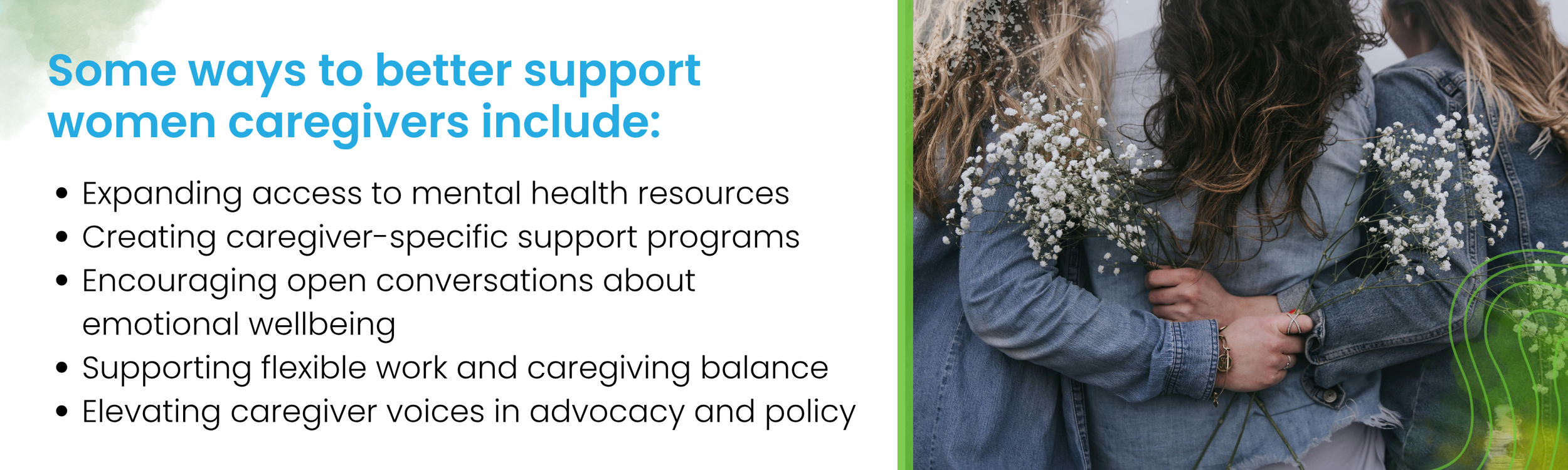
Change begins when caregiving is acknowledged as essential, and caregivers are included in the conversation.
A Global Movement to Elevate Women Caregivers
For many women caregivers, some of the hardest parts of this journey are the feelings that rarely get said out loud: the exhaustion, the guilt, the fear, the isolation, or even the pressure to keep holding everything together for everyone else.
That’s why we created #TheRareTruth campaign: to give caregivers a space to be honest about those experiences without judgment.
Participating is simple:
Name a feeling, a story, a journey that you’d like to express.
Share it on any social media platform using #TheRareTruth.
By sharing your truth, whether it’s a single sentence, a story, a photo, or a quiet reflection, you help make the emotional reality of caregiving more visible for other women carrying the same weight.
Your voice can remind someone else that what they are feeling is real, valid, and shared by more people than they may realize.
Making the Invisible, Visible
Women caregivers are often the steady presence holding everything together: managing appointments, navigating uncertainty, offering emotional support, and continuing to show up even on the hardest days.
Much of that work happens quietly, without recognition, but its impact reaches every part of a family’s life.
Recognizing women caregivers means doing more than simply acknowledging their role. It means creating spaces where they feel supported, understood, and equipped with resources that help make caregiving more sustainable over time.
If you’re carrying the emotional weight of caregiving, connection and support are available. Explore Raregivers resources, join a support group, or participate in our #TheRareTruth campaign.
