
Why Emotional Support Healthcare Is Essential for Caregiver Well-Being
Healthcare conversations often revolve around treatments, diagnoses, medications, and clinical outcomes. While those forms of care remain essential, they do not fully reflect what families experience while living with rare, chronic, and complex conditions over long periods of time.
Behind every treatment plan is a caregiver bearing emotional responsibility that rarely appears within healthcare systems. Families are often balancing uncertainty, financial pressure, advocacy, emotional exhaustion, and the constant effort required to continue functioning through difficult circumstances.
According to the National Alliance for Caregiving and AARP, nearly 40% of family caregivers report experiencing high levels of emotional stress connected to long-term caregiving responsibilities.
That emotional strain affects far more than mood alone. It shapes resilience, communication, relationships, and the overall sustainability of care within a family.
This is one reason emotional support healthcare deserves to be treated as an essential part of
That’s why, in this article, we’ll explore how emotional support healthcare strengthens caregiver wellbeing, improves long-term outcomes, and creates more sustainable support systems for families living with rare and complex conditions.
Healthcare Is More Than Medical Treatment
“When someone receives a rare diagnosis, the emotional toll can be overwhelming,” says Karen Selby, registered nurse and Patient Advocate with The Mesothelioma Center at Asbestos.com.
“Patients and families are often forced to navigate fear, uncertainty, complex medical systems, financial stress, and feelings of isolation all at once.”“While treatment plans, medications, and procedures are critically important, compassionate emotional support can be equally powerful,” she continues. “Feeling heard, understood, and supported can help patients cope better with their diagnosis, make informed decisions, maintain hope, and preserve their dignity during an incredibly difficult time.”
Traditional healthcare systems tend to focus primarily on physical outcomes. Appointments, procedures, symptom management, and medications often define how support is measured, even though emotional well-being influences how families experience every stage of care.
For caregivers supporting someone through a rare disease experience, emotional pressure rarely disappears once an appointment ends.
The responsibility continues through caregiving routines, difficult decisions, advocacy work, interrupted sleep, and the emotional effort required to remain steady for another person during uncertain moments.
Over time, many caregivers begin functioning in survival mode without fully recognizing how much emotional strain has accumulated beneath the surface.
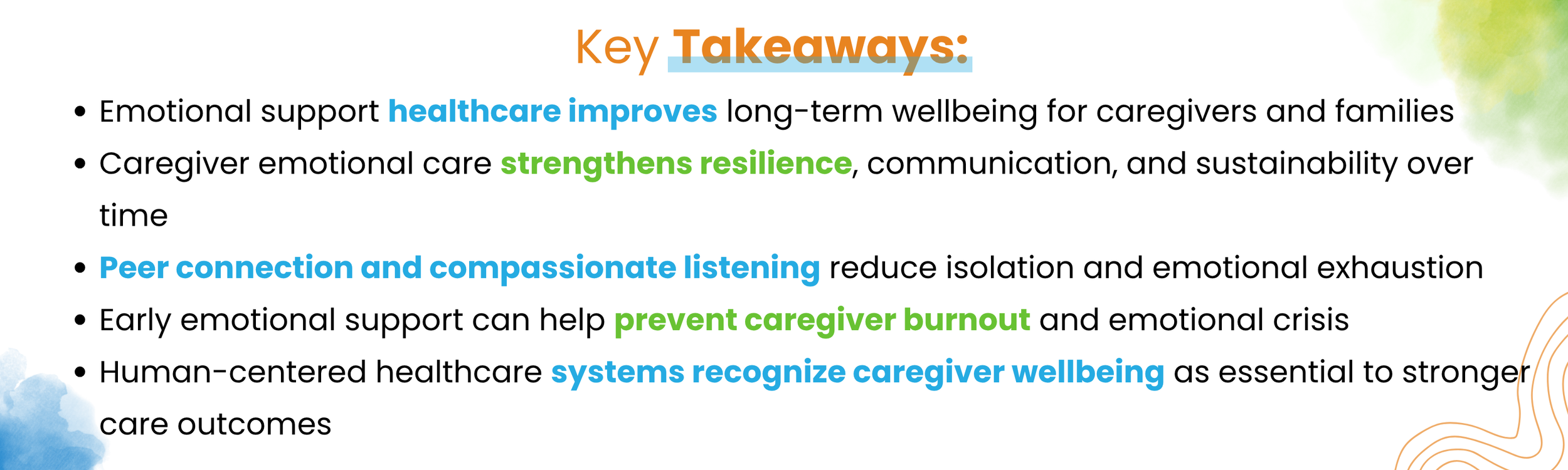
That’s one reason emotional support healthcare matters so deeply. Caregiver emotional care helps families process stress more sustainably, communicate more openly, and maintain stronger emotional stability through experiences that are often physically and emotionally demanding for years at a time.
True healthcare cannot focus solely on treatment while overlooking the emotional realities families carry alongside it.
The Emotional Reality of Rare Disease Caregiving
Rare disease caregiving often requires families to live with prolonged uncertainty.
Health conditions may change unexpectedly, treatments may evolve over time, and caregivers frequently become responsible for coordinating appointments, managing information, advocating within healthcare systems, and supporting emotional well-being within the household at the same time.
That level of responsibility can quietly reshape daily life.
Many caregivers suppress their own emotional needs simply because there never seems to be enough space to pause and process what they are experiencing themselves.
Over time, isolation and emotional exhaustion can deepen, particularly when caregivers feel pressure to remain consistently strong for everyone around them.
This is why rare disease caregiver support plays such an important role in long-term well-being. Connection with others who understand caregiving through lived experience can help reduce isolation while creating space for honesty, emotional release, and support grounded in shared understanding.
Healthcare systems have historically focused far more attention on physical treatment than emotional sustainability, even though caregiving directly affects emotional health over time.
Why Emotional Support Improves Outcomes
Emotional support is not an “extra” layer added onto healthcare. It directly influences how caregivers cope, communicate, recover from stress, and sustain support for the people who depend on them.
When caregivers receive meaningful emotional support, families are often better equipped to manage uncertainty, process difficult experiences, and recognize signs of burnout before emotional exhaustion becomes overwhelming.
Emotional support can contribute to:
Reduced caregiver stress and burnout
Increased emotional resilience
Better communication and coping
Stronger sense of connection and belonging
Improved long-term well-being for caregivers and families
According to the World Health Organization, emotional connection and social support play an important role in long-term mental well-being and resilience across communities.
Many caregivers also benefit from tools that help put language around the emotional realities they experience over time.
Resources like our Emotional Journey Map create space for reflection, validation, and emotional processing throughout different stages of caregiving.
When emotional support healthcare becomes part of healthcare conversations, caregivers are more likely to feel supported in ways that strengthen both family wellbeing and long-term care outcomes.
The Power of Peer Connection and Compassionate Listening
Many caregivers spend years feeling as though they must quietly carry emotional strain to protect the people around them.
That is why peer connection can feel deeply meaningful. Speaking with someone who understands caregiving through lived experience often creates a level of relief and validation that caregivers struggle to find elsewhere.
Compassionate listening matters because caregivers are not always searching for immediate solutions. Often, they need space to speak honestly without judgment, explanation, or pressure to appear emotionally composed.

Peer communities grounded in shared experience allow caregivers to feel understood rather than isolated.
Emotional support caregivers receive within these spaces often creates room for vulnerability, honesty, and emotional release that may not exist within traditional healthcare environments.
For caregivers seeking ongoing connection and conversation, our weekly support groups continue creating spaces where emotional well-being and shared experience remain central to support.
Emotional Support as Preventive Care
Emotional support becomes most effective when caregivers receive it before reaching a breaking point.
Early emotional care can help caregivers recognize stress patterns, establish healthier coping habits, and build emotional stability before stress leads to burnout or an emotional crisis.
Preventative emotional support interrupts the cycle where chronic stress gradually turns into isolation, emotional shutdown, or long-term fatigue.
This is where caregiver mental health programs become especially important within healthcare systems and support communities.
Access to emotional support early in the caregiving experience creates more sustainable outcomes not only for caregivers themselves, but for the families depending on them every day.
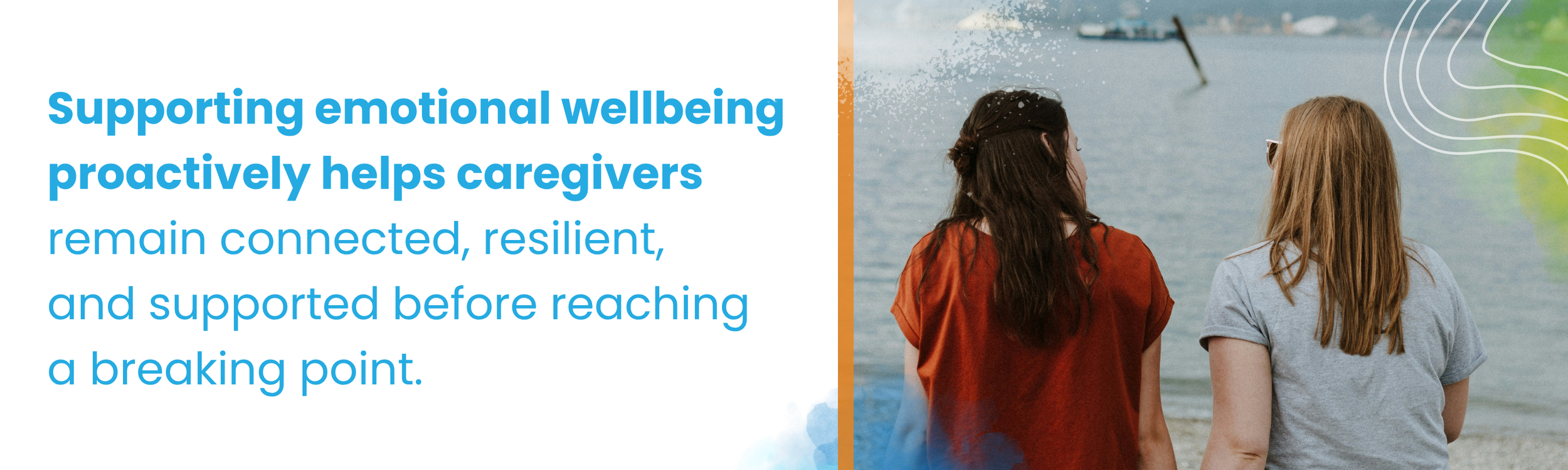
Emotional support healthcare becomes more effective when emotional well-being is treated as part of ongoing care rather than an afterthought addressed only once caregivers are already overwhelmed.
How Organizations Are Expanding Emotional Care in Healthcare
Healthcare organizations are increasingly recognizing that emotional well-being directly affects family outcomes, caregiver resilience, and long-term sustainability within care systems.
Institutions such as Sydney Children’s Hospitals Network continue advancing family-centered approaches that acknowledge the emotional realities caregivers experience alongside medical treatment.
At the same time, organizations like Microsoft continue supporting innovation and collaboration across healthcare ecosystems in ways that strengthen communication, accessibility, and support resources for families.
These broader efforts reflect a growing understanding that healthcare experiences become stronger when emotional well-being receives meaningful attention alongside clinical care.
At Raregivers, this belief continues to shape programs focused on emotional connection, peer support, and long-term caregiver wellbeing.
Caregivers looking for immediate support tools, crisis support access, and emotional well-being resources can explore ourRaregivers resource center for additional guidance and support.
The People Who Give Care Need Care, Too
Caregivers spend enormous amounts of time supporting the emotional and physical well-being of others while quietly carrying significant emotional weight themselves.
Emotional support healthcare recognizes that families are not only managing medical realities. They are also carrying fear, uncertainty, grief, exhaustion, resilience, and the emotional responsibility of continuing to move forward through difficult circumstances.
When healthcare systems acknowledge those realities openly, caregivers are more likely to feel supported rather than invisible in the care experience.
Caregiver wellbeing improves when emotional support, peer connection, and caregiver emotional care are treated as essential parts of sustainable healthcare.
At Raregivers, emotional connection, compassionate listening, and peer support remain central to the belief that sustainable care requires sustainable caregivers.
