
Fathers Who Care: The Untold Stories of Rare Disease Dads
“Caregiving has given me a different perspective on what my mom and grandma had to do for my brother and I growing up,” says Patrick James Lynch, CEO of Believe Limited and caregiver to his daughter with hemophilia.
“The first time I let my daughter run freely around the playground was a major milestone for this semi-helicopter dad. It gave me confidence that she didn’t need to live inside a bubble.”
Not many people talk openly about the emotional realities fathers carry within caregiving. In many communities, fathers are still expected to remain composed, dependable, and steady, no matter how difficult circumstances become.
That’s one reason Father’s Day conversations often center around gratitude, protection, and the role fathers play within families. Those conversations matter, but they rarely reflect everything happening behind the scenes for father caregivers supporting children and loved ones living with rare, chronic, and complex conditions.
Across rare disease communities, many father caregivers already have so much on their backs, balancing appointments, therapies, advocacy, emotional support, financial pressure, and uncertainty all at once while still trying to remain emotionally present.
And much of that responsibility happens quietly, hiding the emotional realities fathers carry from the outside world.
According to the National Alliance for Caregiving and AARP, family caregivers commonly report high levels of emotional strain connected to long-term caregiving responsibilities. For many rare disease fathers, those pressures become part of life long before anyone asks how they’re coping personally.
That’s why, in this article, we’ll explore the realities, emotional experiences, and father caregiving stories that deserve far more visibility within everyday caregiving conversations.
The Often-Unseen Role of Father Caregivers
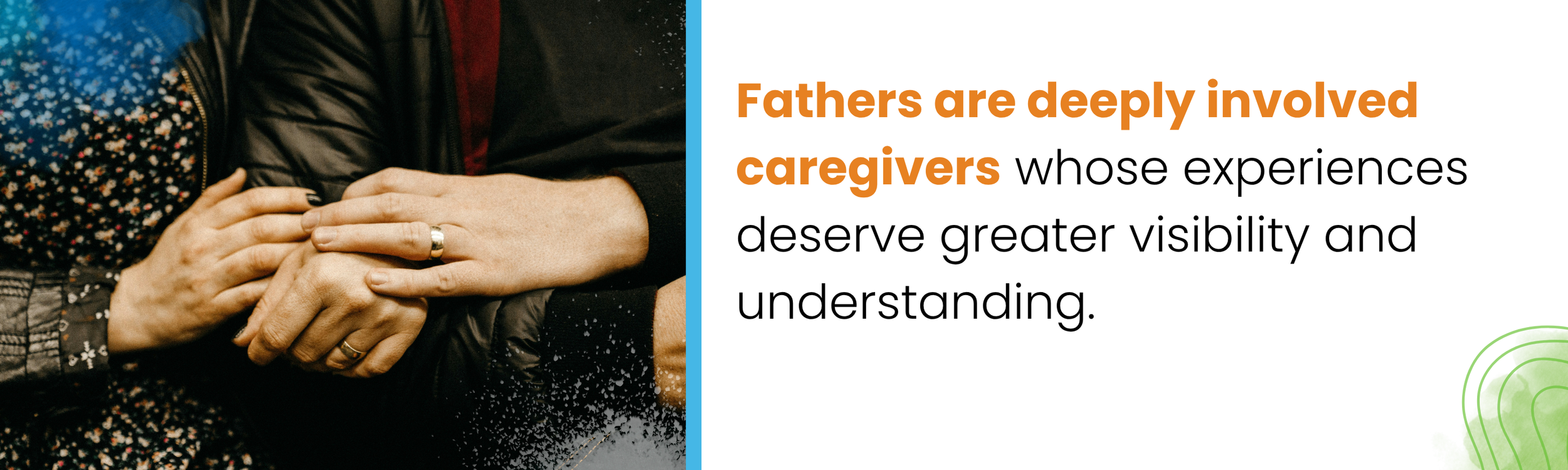
Caregiving conversations have historically focused far more attention on mothers and other female family members, even though many father caregivers are deeply involved in the emotional and practical aspects of caregiving.
Many fathers coordinate appointments, advocate inside healthcare systems, support emotional well-being within the family, manage transportation, and help maintain stability during uncertain moments.
Some become primary caregivers directly overseeing treatments and medical routines, while others balance caregiving alongside full-time work and financial responsibilities.
Many dads caring for rare disease children also move constantly between roles without separating them clearly from one another. In a single day, a father may become an advocate, caregiver, emotional support system, provider, decision-maker, and source of reassurance for the rest of the family.
Because much of that work happens quietly, male caregivers can begin to feel overlooked in broader caregiving conversations.
What Caregiving Looks Like for Rare Disease Dads
“The fact that most caregiving spaces are female-dominant can make it difficult, as a father, to feel like I have a place,” says Lynch.
The realities faced by dads caring for rare disease children often extend far beyond what people see publicly.
Many fathers help manage therapies, medications, insurance challenges, educational planning, and communication with healthcare teams while also supporting emotional well-being within the family.
At the same time, they’re often carrying concerns about future outcomes, financial pressure, and uncertainty surrounding treatments or disease progression.
Caregiving also pushes many fathers into unfamiliar territory. Healthcare systems, insurance policies, medical terminology, educational advocacy, and crisis management quickly become part of life for families navigating rare disease care.
Over time, those responsibilities can become emotionally exhausting, especially when fathers feel pressure to remain composed no matter how difficult circumstances become privately.
Research by the American Psychological Association has shown that long-term caregiving responsibilities can contribute to emotional stress, anxiety, and mental fatigue among caregivers.

The Emotional Side of Fatherhood and Caregiving
Many male caregivers grow up surrounded by expectations that encourage emotional restraint and self-sacrifice. Within caregiving, those expectations can become even heavier.
Many fathers continue supporting their families while privately carrying fear, stress, exhaustion, grief, and uncertainty that they rarely express openly. Some worry about emotionally overwhelming their children or partners.
Others focus so heavily on remaining functional that they stop checking in with their own emotional well-being altogether. The emotional side of caregiving doesn’t become less recognized simply because it is expressed differently.
For many rare disease fathers, caregiving deepens emotional connection within the family while also increasing emotional vulnerability. Love, responsibility, fear, and resilience often coexist throughout the caregiving experience.
Male caregivers experience emotional strain just like any other caregiver, even when those feelings remain largely unspoken.
The Stories Rare Disease Dads Wish More People Heard
Every caregiving experience can seem different, but many father caregiving stories share emotional realities that feel familiar across rare disease communities.
Some fathers describe feeling protective while living with uncertainty surrounding treatments or future outcomes. Others speak about becoming advocates inside healthcare systems they never expected to understand so deeply.
Many also describe carrying emotional stress quietly because they feel responsible for remaining steady during difficult moments for the rest of the family.
Some of the experiences fathers commonly describe include:
Feeling protective while navigating uncertainty.
Learning to advocate in unfamiliar healthcare systems.
Carrying emotional stress quietly.
Finding strength through connection with family.
Wanting recognition without needing praise.
Sharing father caregiving stories helps broaden public understanding of caregiving by showing that fathers are not emotionally distant from these experiences.
Many are carrying enormous emotional responsibility while continuing to support the people they love in deeply committed ways.
Why Representation and Recognition Matter
When fathers see their experiences reflected in caregiving conversations, storytelling initiatives, and advocacy campaigns, it becomes easier to recognize that they are not isolated within what they’re carrying emotionally.
Representation also helps challenge outdated stereotypes around caregiving roles. Fathers are not simply “helping” within rare disease families.
Many are coordinating care, advocating inside healthcare systems, supporting emotional well-being, and managing responsibilities that shape nearly every part of family life.
Recognition matters because caregivers are more likely to seek support when they feel understood rather than overlooked.
Communities that more intentionally include fathers create stronger, more inclusive conversations around caregiving and emotional support.
The Power of Community for Male Caregivers
Many male caregivers aren’t looking for praise or attention. More often, they want spaces where they can speak honestly without feeling pressure to minimize what they’re carrying emotionally.
Peer connection reduces isolation because caregivers begin to recognize pieces of their own experiences in others' stories. That recognition can feel validating for fathers who rarely hear caregiving conversations reflect their realities directly.
At Raregivers, storytelling and emotional visibility remain central to helping families feel recognized within larger advocacy conversations.
Fathers and families seeking connection and support can also join our Weekly Support Groups, where caregivers come together for honest conversation, emotional support, and shared lived experience.
Community support helps rare disease fathers feel less isolated and more understood.
Celebrating the Fathers Who Show Up for Their Families
Father caregivers continue to carry enormous emotional and significant responsibilities that often remain invisible to the outside world.
They show up through advocacy, emotional support, caregiving routines, difficult decisions, long nights, hospital visits, and the steady commitment required to support loved ones through uncertain circumstances.
Caregiving takes many forms, and fathers remain an essential part of caregiving communities across the rare disease landscape.
Every father caregiver deserves to feel seen, valued, and supported, not only for what they do, but also for the emotional realities they carry while caring for the people they love most.
Join theRaregivers community to explore caregiver stories, connect with family-centered resources, and be part of a growing movement bringing greater visibility to rare disease families and father caregivers.
