
How Family Caregiver Support Programs Create Stronger Communities Through Collaboration
The right family caregiver support programs don't happen by chance. See how nonprofit partnerships turn individual services into systems that strengthen caregivers, families, and communities.
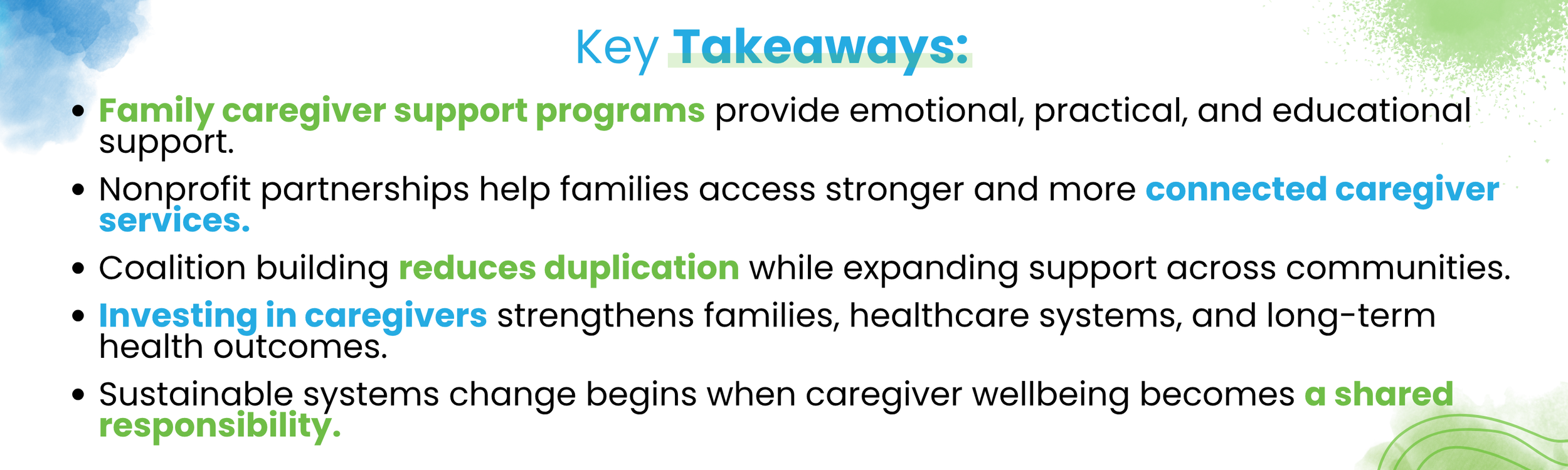
Family caregiver support programs can change lives, but their greatest impact is only visible when organizations work together. Even today, many caregivers still navigate emotional support, education, advocacy, and practical resources through separate services that work independently.
One organization may offer emotional support, another may provide education, while a different group focuses on advocacy or healthcare navigation. Although each service creates value, caregivers can still feel overwhelmed when they must connect those pieces themselves.
That's why family caregiver support programs become far more effective when organizations collaborate. Shared knowledge, coordinated resources, and stronger partnerships help caregivers receive support before pressure becomes overwhelming.
Continue reading to see how coalition-based collaboration is helping nonprofits create lasting change for caregivers, families, and healthcare systems.
What Are Family Caregiver Support Programs?
Family caregiver support programs help caregivers manage the emotional, practical, and everyday realities that come with caring for someone they love.
Many programs offer emotional support, education, peer connection, healthcare navigation, advocacy, and practical resources. Together, these services help caregivers make informed decisions while reducing isolation and building confidence throughout the caregiving journey.
According to the Family Caregiver Alliance, caregivers who receive education, emotional support, and practical assistance are better equipped to manage ongoing caregiving responsibilities while protecting their own well-being.
However, even the strongest individual program can't meet every need. Families often benefit most when different organizations work in liaison instead of asking caregivers to navigate separate systems.
Why Nonprofits Fill Critical Gaps
While healthcare systems provide essential clinical care, they can't always meet every emotional need caregivers experience outside medical appointments. That's where nonprofit organizations often become an essential bridge between healthcare and day-to-day family life.
Many caregivers don’t need medical updates. They may also need someone who understands the emotional weight of caregiving, practical guidance for navigating unfamiliar systems, or a community where they don't have to explain every detail before feeling understood.
Nonprofit organizations often help by providing:
Emotional support that validates caregiver experiences throughout the caregiving journey.
Peer connection with people who understand rare disease caregiving through daily life experience.
Education that helps families make informed decisions with greater confidence.
Advocacy that amplifies caregiver voices across healthcare and policy conversations.
Navigation support that helps families access services, resources, and community programs.
Whole-family care that recognizes caregiver wellbeing directly influences patient wellbeing.
In addition, nonprofit organizations often build trust within communities because they remain connected long after individual healthcare visits have ended. That continuity allows caregivers to receive support throughout the different stages of caregiving instead of only during moments of crisis.
Accordingto the National Council of Nonprofits, lasting community impact often depends on strong partnerships between nonprofits and other sectors by responding to needs that individual sectors often can't address alone.
However, the greatest impact doesn't happen when organizations simply offer excellent programs. It happens when those programs become part of a larger network working toward the same goal.
Coalition Building Creates Greater Impact
Individual programs can make a real difference. However, lasting change becomes possible when organizations share knowledge, coordinate services, and work toward the same goal instead of solving the same problems separately.
Coalition building creates that opportunity. Rather than asking caregivers to move between disconnected services, coalition partners can strengthen one another by sharing expertise, expanding referrals, and listening to caregiver experiences together.
A strong coalition can create greater impact by:
Sharing knowledge and resources so families spend less time searching for support.
Amplifying caregiver voices to shape programs around daily life experience instead of assumptions.
Strengthening healthcare partnerships that connect emotional support with clinical care.
Encouraging cross-sector collaboration between nonprofits, healthcare providers, advocacy groups, funders, and community organizations.
Reducing duplication so organizations complement one another instead of competing for the same outcomes.
At the same time, collaboration allows nonprofit organizations to focus on what they do best while knowing families can access additional support through trusted partners. That approach creates a stronger experience for caregivers because support feels more connected.
Raregivers continues advancing this approach through its Caregiver Voices initiative, coalition partnerships, and the Emotional Journey Map.
These help caregivers, healthcare professionals, and community partners recognize emotional experiences throughout the caregiving journey and respond with more meaningful support.
From Programs to Systems Change
That's why many nonprofit organizations are moving beyond individual programs and investing in long-term collaboration. Instead of responding only after caregivers reach crisis, they're building structures that strengthen emotional wellbeing much earlier.
Several approaches are already helping move caregiver support from individual services to broader systems change:
Sustained funding allows caregiver programs to grow instead of operating through short-term projects.
Shared measurement helps organizations understand which approaches create meaningful outcomes for caregivers.
Community partnerships connect healthcare, advocacy, philanthropy, and nonprofit organizations around common goals.
The Raregivers100 (RG100) initiative helps expand collaboration among leaders committed to improving caregiver wellbeing across communities.
Evidence-informed tools give caregivers and professionals practical ways to recognize emotional needs before they become overwhelming.
However, systems change doesn't happen through funding alone. It grows when caregivers remain at the center of every conversation, every partnership, and every decision about future support.
Frequently Asked Questions About Caregiver Support Programs
1. What are family caregiver support programs?
Family caregiver support programs provide emotional support, education, peer connection, advocacy, navigation, and practical resources that help caregivers manage the ongoing responsibilities of caring for a loved one.
2. Why are nonprofit organizations important to caregiver support?
Nonprofits often provide services that healthcare systems cannot deliver consistently, including emotional support, community connection, education, advocacy, and long-term caregiver engagement.
3. How do caregiver support programs improve outcomes for families?
They help reduce isolation, strengthen caregiver confidence, improve care coordination, support emotional wellbeing, and make it easier for families to continue providing care over time.
4. What role do coalitions play in supporting caregivers?
Coalitions bring organizations together to share resources, strengthen partnerships, reduce duplication, and create more coordinated support for caregivers.
5. How do nonprofit partnerships strengthen caregiver support?
Partnerships allow organizations to combine expertise, improve referrals, expand available services, and create more connected experiences for caregivers.
6. Why should foundations and funders invest in caregiver support programs?
Supporting caregivers improves family stability, strengthens healthcare outcomes, and helps reduce the long-term costs associated with caregiver burnout and fragmented support systems.
7. How is Raregivers helping create systems change?
Raregivers brings together caregivers, healthcare professionals, nonprofits, advocates, and partners to strengthen emotional wellbeing through coalition building, caregiver voices, practical tools, and collaborative initiatives.
Stronger Partnerships Create Stronger Care
Family caregiver support programs create the greatest impact when they become part of a connected system instead of isolated services. Every partnership, shared resource, and coordinated effort helps caregivers spend less time searching for help and more time receiving it.
In addition, investing in caregiver wellbeing strengthens families, healthcare organizations, and entire communities because caregivers are essential partners in every stage of care.
When organizations collaborate, emotional support becomes part of healthcare infrastructure instead of an optional service offered only after families reach crisis.
If you're ready to help build a stronger future for caregiver support, consider joining the Raregivers Coalition and become part of a growing network working together to create lasting systems change.
