

STARTING YOUR EMOTIONAL JOURNEY
THE CAREGIVER EXPERIENCE
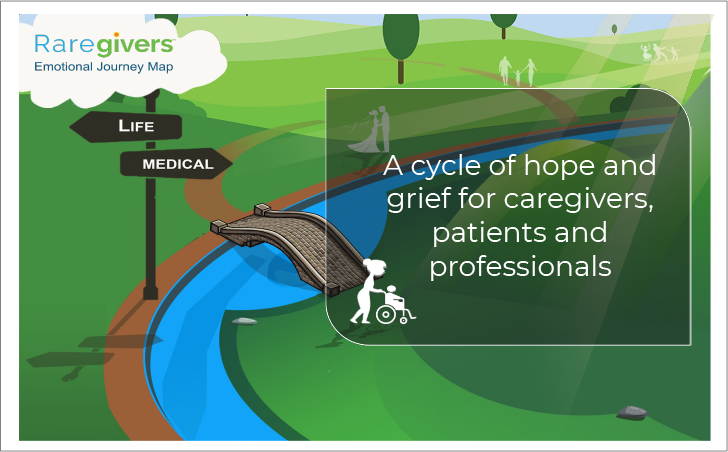
PLEASE SCROLL DOWN TO EXPERIENCE THE SIX STAGES OF THE EMOTIONAL JOURNEY MAP


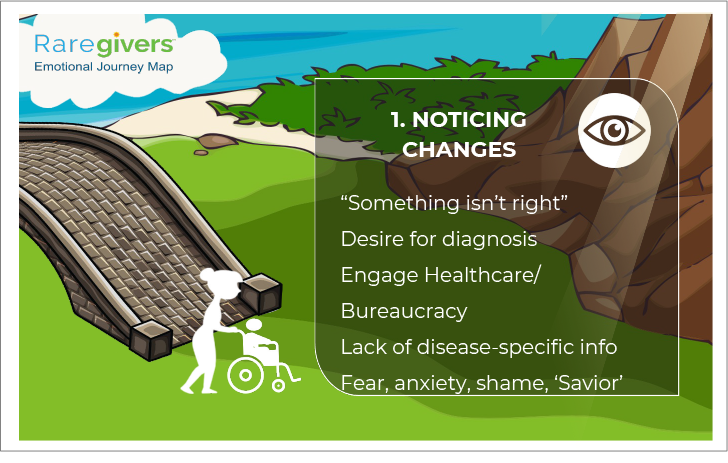
STAGE 1: NOTICING CHANGES
“SOMETHING ISN’T RIGHT”
“Something isn’t Right”
From the appearance of first symptoms to the point of diagnosis can be a long, painful journey for caregivers, patients and professionals supporting the family. Medical journeys often start with a gut feeling — something’s not quite right— that leads to questions. What’s wrong? What’s going on? How do we fix this? Who do we talk to?
Desire for diagnosis
Many rare diseases are hard to recognize and diagnose. The desire for answers leads raregivers to consult with multiple primary care providers and different kinds of specialists in order to answer the question, “What’s wrong?” Finding answers, or a diagnosis, can take years (on average, 5-7 years) and in the process, raregivers become—need to become—experts in asking the right questions.
Engage specialists / bureaucracy
Finding reasons for symptoms can lead to a range of exploratory tests, hospitalizations, travel to see disease specialists, surgeries, and even misdiagnosis. Communicating with health professionals can be challenging. Healthcare providers do not always explain why tests are necessary, or provide information about costs, insurance, and how to be a caregiver
Lack of disease - specific information
The diagnostic journey (or odyssey) can be circular. Tests might rule out one diagnosis
but circle back to the unknown. Partial answers, the uncertainty that comes with waiting for test results, and lack of diagnosis can pull raregivers down the time-consuming and energy-sapping rabbit hole of online research, scouring the internet for symptom- and disease-related information, diagnostic tests, and treatment options.
Emotions: Fear, anxiety, shame, “Savior”
Raregivers say that fear about the future, anxiety about the unknown, and fatigue from navigating health care and insurance are all common experiences in the early stages of noticing changes in their loved ones. Raregivers might also feel shame when they aren’t able to find answers or provide solutions.
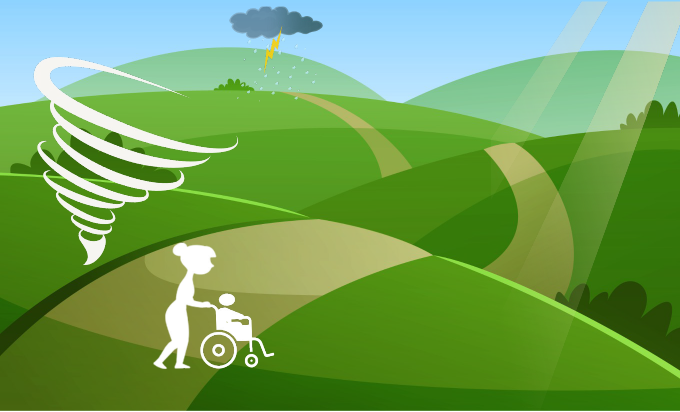
STAGE 2: ADJUSTING +/- DIAGNOSIS
“MANAGING SYMPTOMS”

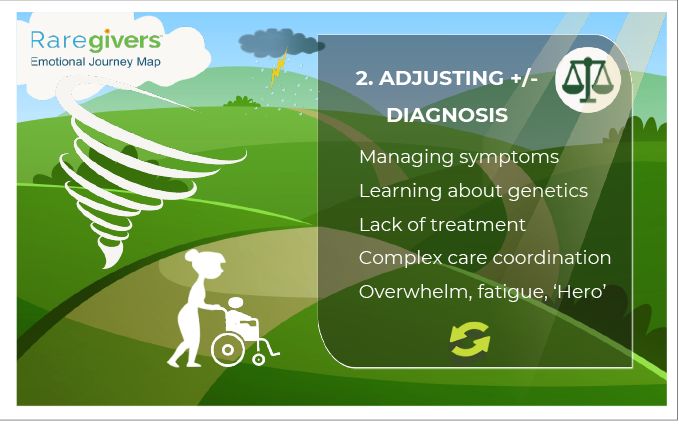
Managing symptoms
Even while raregivers are waiting for test results, coordinating care with healthcare providers, and navigating insurance, they still have to find ways of managing their loved one’s symptoms. Raregivers say they spend a lot of time and energy contacting and liaising with providers and specialists, sourcing and acquiring adaptive equipment, and seeking and accessing support services. Raregivers are often doing all of these tasks while also managing the disparate needs of other children and members of the family and planning for their loved one’s future care.
Learning about genetics
Once a diagnosis is made, cascade genetic testing and/or genetic counseling might be offered to other family members. Genetic testing identifies the genetic basis for a rare condition and provides information to help parents and raregivers make healthcare decisions. Raregivers say the learning curve about genetic testing is steep but necessary. However, not all raregiver’s journeys have a diagnosis. This uncertainty can be very challenging for raregivers.
Complex care coordination
Rare diseases are generally complex and require specialist care that involves coordinating input from health professionals across different disciplines, clinics, and hospitals. Few healthcare settings do this care coordination for patients. Depending on location, insurance, and other factors, raregivers often spend considerable time and energy finding a way through the healthcare system, including insurance and financial assistance, and coordinating care across different types of providers. Strain on family budgets may increase during this adjustment phase.
Lack of treatment
Even when a diagnosis occurs, health professionals do not necessarily know about or are able to share information about rare diseases or their potential treatment options, and not all rare conditions are associated with effective or curative therapies.
Emotions: Overwhelm, fatigue, “Hero”
Recognizing and acknowledging that treatment might not be available or effective while also trying to coordinate care for loved ones places a tremendous burden on raregivers to be a “hero.” But being a hero on a daily basis can

STAGE 3: SHIFTING RESPONSIBILITIES
“ROLE STRAIN/ IDENTITY CHANGE”
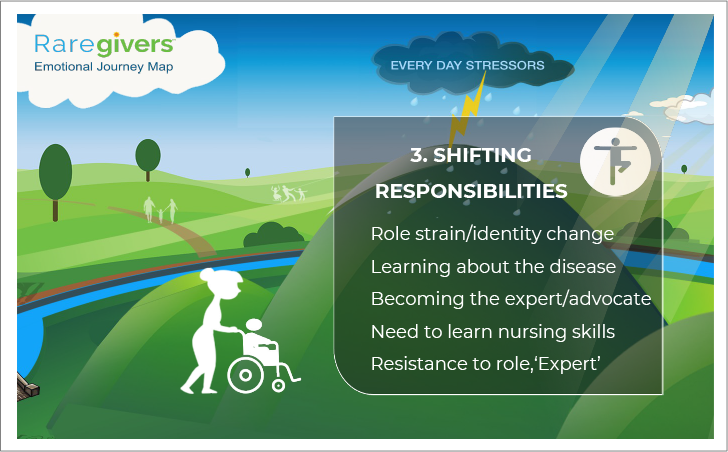
Role strain/identity change
Family life changes as the need for caregiving increases, especially for women (as mothers, relatives, and partners), who are the dominant raregivers for people with rare diseases. Caregiving is time-intensive and involves adopting multiple roles such as care coordinator, researcher, decision-maker, and advocate. Becoming the main caregiver can place strain on those giving care as they try to balance employment, family life, social life, and caregiving. Becoming a caregiver can also mean losing other meaningful sources of identity and lead to feelings of loneliness and abandonment.
Learning about the disease
Diagnosis can bring relief, but scouring the internet for symptom and disease-related information, diagnostic tests, and treatment options is a constant for many rare disease raregivers, especially if there are no current treatment options.
Becoming the expert/advocate
Raregivers often spend a great deal of time researching their loved one’s disease or condition, possible treatments and relevant clinical trials. As such, they become the “experts” in their loved one’s rare disease. Raregivers often find themselves educating health professionals about the rare disease or condition.
Learning new supportive care skills
Many rare conditions require extensive, long-term supportive care and specialist services such as physical therapy, occupational therapy, and speech therapy. Commercial health insurance, Medicare, or Medicaid do not always cover these services. As a result, raregivers say they have to learn new skills (e.g., medication or oxygen administration, tube feeds, manual handling, lifting) and develop supportive care and nursing expertise.
Emotions: Resistance to role, “Expert”
Raregivers say they feel frustrated about having to become experts in their loved one’s rare disease. The more that raregivers learn about their loved one’s rare disease, the further they might feel from their “old normal” and the “normal” of other people’s family lives.

STAGE 4: FULL-TIME CARE
“COST OF TIME OFF WORK/ LOSS OF INCOME”
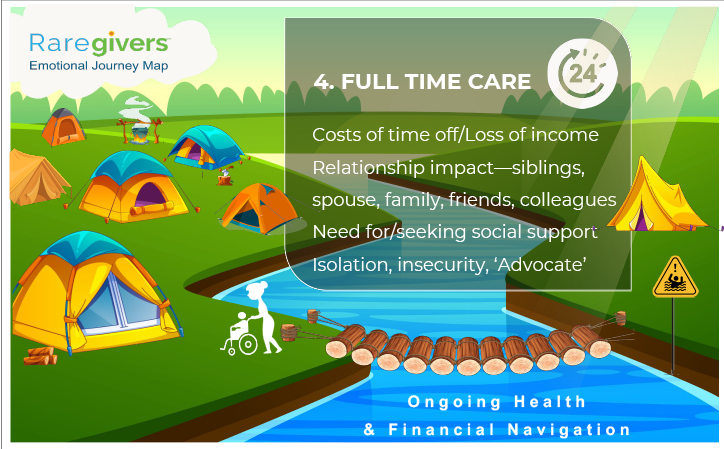
Costs Of Time Off Work/Loss of Income
Many raregivers are in paid employment when they start caregiving. Trying to balance caregiving with paid work or employment looks different for everyone. To find this balance, some raregivers reduce their working hours, seek work with flexible leave, or stop working altogether. These changes in access to work often reduce income, weaken work-placed ties and friendships, and can affect productivity at work. In other cases, raregivers have to increase their working hours to address new financial demands.
Relationship Impact
Becoming the main caregiver in a family often redefines relationships between children, spouses, and wider family. In addition, many rare diseases are heritable but unpredictable, leading to anxiety about how and when the disease could affect other family members. The demands of caregiving also limit the time and opportunity for leisure, social activities, and contact with friends and relatives, which is likely to increase emotional stress and could lead to further feelings of isolation.
Need for/seeking social support
Raregivers often provide ongoing care with little or no break. But the enormity of responsibilities as a rare caregiver can feel overwhelming, as can the burden of carrying the feelings and worries of other family members. Social and emotional support can be valuable in helping raregivers to emotionally recharge, build relationships with others, and find validation. Respite care from peers or community/ rare disease organizations can help to restore balance and open opportunities to cultivate leisure and social activities that bring pleasure and increase contact with friends and relatives.
Emotions: Isolation, Insecurity, “Advocate”
The loss of work and colleagues can have a profound impact on how raregivers see themselves, as well as how others see them. The time, emotions, and energy that caregiving requires can result in depression, social isolation, and relationship strain.

STAGE 5: END OF LIFE
“ACKNOWLEDGEMENT”
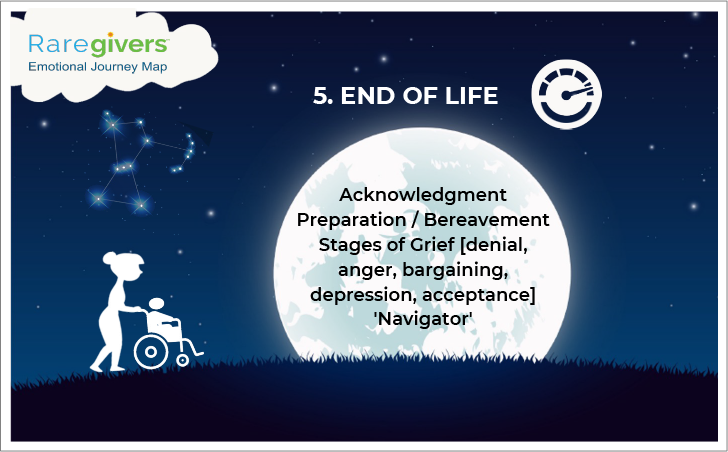
Acknowledgement
Caregiving in rare disease involves a delicate balance between trying to create and live a “normal” life and grieving for the life that could have been - for themselves, their loved ones or those they serve professionally. At some point, raregivers must grapple with how to best prepare for the end of life, or how to move forward, leaving behind their dreams of an idyllic life. For some, this involves the experience of bereavement while the loved one being cared for is still living. This experience, or anticipatory grief, can last many years.
Preparation / Bereavement
Anticipatory grief can be supported through compassionate care, decision support, and counseling, as well as by finding opportunities to discuss the future, death, and dying with others. As a raregiver it’s difficult to know what the future will look like after the passing of a loved one to whom intensive care has been given.
Emotions: Stages of Grief*, “Navigator”
Raregivers say that it’s easy to become, and be seen as, the Navigator at this stage—the person who is the in-the-moment problem-solver trying to find a way through their own feelings of loss, as well as the feelings of others. We can support your navigation with training and resources.
Denial Can look like: Avoidance, forgetting, distraction
Can feel like: Shock, numbness, confusion
Anger Can look like: Pessimism, cynicism, irritability
Can feel like: Frustration, impatience, rage
Bargaining Can look like: Over-thinking, comparing self to others, judgment about self/others
Can feel like: Guilt, shame, blame
Depression Can look like: Sleep/appetite changes, reduced energy, reduced social interest
Can feel like:Sadness, despair, hopelessness
Acceptance Can look like:Being present in the moment, able to tolerate emotions, adapting
Can feel like:Felling “good enough,” self-compassion, validation
Finding Meaning Can look like: Remembering those who have died with more love than pain
Can feel like:Honoring loved ones who have died


STAGE 6: FINDING MEANING
“PROCESSING TRAUMA/ REFLECTING”
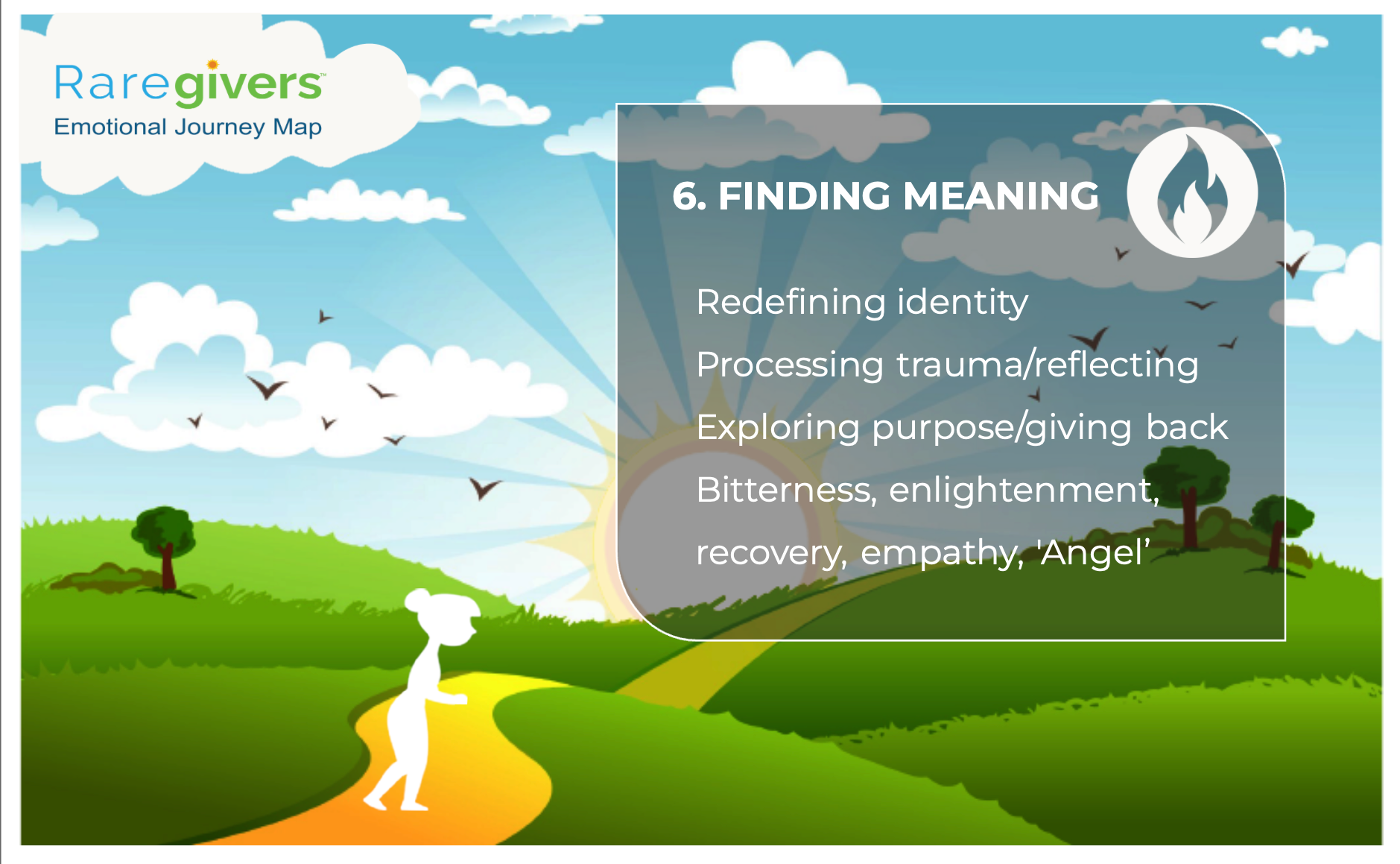
Processing trauma / reflecting
When caregiving has been at the core of someone’s experience and identity, the end of caregiving can trigger not only distress, but also guilt and uncomfortable and unanticipated feelings of relief. Similar to individuals who have lost a loved one to suicide, raregivers might experience a period of prolonged or complicated grief. Raregivers who have lost a child might re-experience feelings of loss and grief for many years after their child’s death, especially during times that would have been milestones for their child. It can also be difficult to feel motivated to engage in life or connect with people who have not experienced a similar loss. These feelings are normal.
Redefining identity
Following the death of a loved one, many raregivers suffer identity loss and find it difficult to adjust to life without their caregiving role, still also living with an acute sense of loss. For some raregivers, grieving involves not only the loss of their loved one, especially a child, but also involves grieving for the life they hoped to live with their loved one. Over time, it is possible for raregivers to feel stronger and develop a new identity. But it can take time to find a new sense of purpose in life, to re-enter the world of paid work, and to make new relationships with people who are not raregivers.
Exploring purpose / Giving back
It is possible to reconnect with life and reinvent one’s sense of purpose and identity following the loss of a loved one with rare disease. It is valuable for raregivers to find and embrace sources of emotional support that affirm their relationship as a raregiver and encourage motivation to continue living. Caregivers of people without rare disease say that providing support to other caregivers and finding ways to honor and keep bonds with their deceased loved ones are helpful ways to explore purpose and give back. Many raregivers who have survived this stage find purpose and meaning in drawing on their lived experience to support research, advocacy, or fundraising, or by mentoring rare families or professionals.
Emotions: Bitterness, recovery, enlightenment, empathy, ‘Angel’
There is potential for raregivers to feel bitter and experience feelings of shame, blame, and isolation following the death of a loved one with a rare disease. As a result, it can be extremely difficult for raregivers to talk about or, at times, even acknowledge their grief and loss. At the same time, family members, friends and acquaintances might be reluctant to talk about death and how the raregiver’s life has changed. Once they are able to find meaning, it sows seeds of empathy and makes it possible for heart-to-heart connection with others going through this experience.
10 ESSENTIAL TIPS FOR SUSTAINABLE RAREGIVERS™
1. Take Sleep Seriously: Sleep deprivation takes a toll on your body and can affect your mood. If you are chronically sleep-deprived, consider how enjoyable and productive your time awake will be. What’s the benefit of reducing your sleep just so you can drift through the next day feeling like a zombie? Four hours of uninterrupted sleep is essential and 8 to 9 hours each day is ideal. Schedule your sleeping hours and stick to them. Make sure you are sleeping in a dark room with no electronic equipment, no mobile phones and no TV!
2. Schedule time in nature: Sunrises, sunsets, moon cycles, weather patterns, the four seasons ~ nature is an infinite source of energy. Schedule time in nature on your calendar each week and make sure that you have the resources in place to cover you. It takes practice to put our own needs first, but as we get stronger, we will have more energy to care for ourselves and for others.
3. Focus on your own nutrition: This is an important daily exercise, especially when time is short. Make sure that you have the proper fuel to burn and reserves for when you need an extra boost. Take charge of what you eat and you will start to notice a difference in how you feel each day. Even simple things like eating less processed food or giving up quick service meals makes a huge difference in overall attitude and energy. If you need additional help in this area, seek out a nutritionist or ask your doctor for guidance. Try to include healthy snacks for yourself, so that you avoid junk food cravings when you’re hungry.
4. Be mindful and allow yourself to receive: The simple mantra of gratitude is a good start as it places you in the present moment by appreciating all that you have in your life. It is only in the present that we can truly experience happiness and the wonderment of being alive. It takes practice to put our own needs first, but as we get stronger, we will have more energy to care for ourselves and for others.
5. Get physical: Take time to do something just for yourself, even if it is only for 10 minutes a day. Light a candle over coffee and practice deep breathing, take a long shower, walk to do that errand. Make sure you schedule the time and set the intention to do it. After doing this, you will find yourself back in control, in charge and replenished with energy to continue with whatever the day brings.
6. Connect socially with others: You are part of a global community of 350 million people worldwide! Broadening your outreach beyond a specific disease can connect you with a much broader community of families, advocates and experts in rare, chronic and complex diseases. Consider joining our weekly support groups.
7. Name your emotions and write them down: Journaling is a self-reflective practice that allows you to notice your feelings and what is really going on inside of you. Begin by writing for 10 minutes each day and see what appears.
8. Ask directly for what you need from family, friends and professionals:
Raregivers are constantly getting less than what they require, because they are too often focused on others and too polite to ask directly for help, including counseling or therapy. Asking for what you need is an act of service - for yourself and those around you - because it allows you to sustain your emotional and physical health.
9. Use self-care rituals to create structure: Rituals allow us to pause and be present in a moment that has been planned specifically for a purpose. It is a beautiful way to connect with one another and it is decidedly underused in today’s society. Some easy rituals include lighting a candle, taking three deep breaths, walking in nature or enjoying the night sky.
10. Enlist a predictable flow of community resources that meet your needs:
Due to the chaotic nature of disease management, it is important to create structure and downtime for yourself by enlisting the help of others that you trust. You can create a schedule with your partner, trade childcare with a friend, hire a qualified caregiver or family members/neighbors/work colleagues to help. You need to be able to count on these caregivers for a few hours each day, or more if you continue working.
IN CLOSING
Not everyone’s journey is the same.
But we do believe that there is a common baseline of chronic caregiving stress and
landmark events during the journey that most raregivers share, regardless of the disease.
That is why we have created the Raregivers™ Emotional Journey Map.
Practicing holistic, person-centered self-care as a caregiver, patient or professional can help to avoid depression and other mental health issues. The National Alliance on Mental Illness provides mental health education and access to resources, such as support groups and information about evidence-based psychological therapies including Cognitive Behavioral Therapy and Acceptance and Commitment Therapy.
This Raregivers™ Emotional Journey Map is for raregivers, patients, professionals, and other individuals and organizations involved in supporting raregivers in rare disease. A rare life is a long, life-altering journey that is characterized by cycles of grief and hope. To find more information about holistic, person-centered pathways and support resources please visit Raregivers™ Coalition Global Mental Health & Wellness Program for Rare Disease.