
What Is Caregiver Stress? How Rare Disease Families Can Build Resilience Before Crisis
Caregiver stress can build while you’re focused on everyone else’s needs. With early support, families can recognize the pressure before it becomes a crisis.
If you’ve ever cared for someone with complex needs, you understand how stressful the situation can get. You can leave an appointment with answers, instructions, and next steps, yet still feel weighed down by everything left unsaid.
Maybe the next symptom is already on your mind, or the next bill is waiting at home. Maybe the referral is delayed, the medication question remains open, or everyone still needs you steady.
As a caregiver, that pressure can become part of the routine before anyone names it as stress.
Caregiver stress is the emotional, mental, and physical strain that comes with ongoing care. It can affect how you sleep, think, respond, plan, and connect with other people.
For rare disease families, however, stress can feel harder to explain because the journey of caregiving often brings uncertainty at every stage. Global Genes reports that 400 million people worldwide live with rare diseases, and 95% of rare diseases lack an FDA-approved treatment.
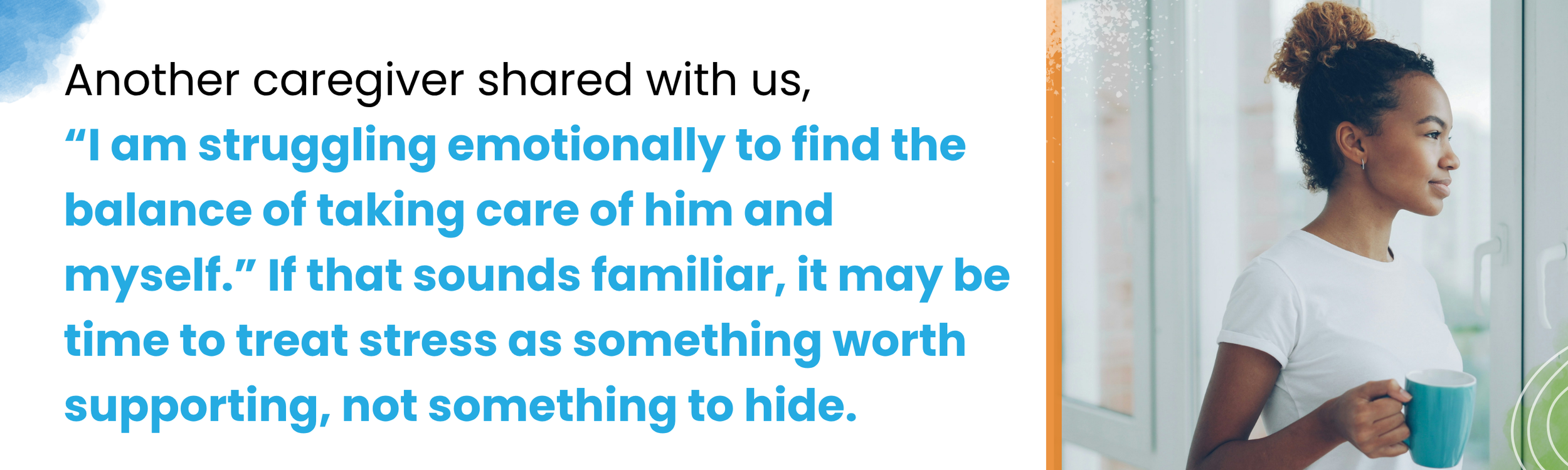
So, if you’ve felt overwhelmed, it does not mean you’re failing. It may mean you’ve been carrying a level of responsibility that deserves earlier support.

Continue reading to see what caregiver stress can look like, and how families can build support before a crisis.
Why Rare Disease Caregiving Creates Unique Stress
When you’re caring for someone with a rare disease, uncertainty can follow you into your daily life. Your family may wait years for a diagnosis, but they may still face limited treatment options, unclear next steps, or providers who are learning alongside them.
A caregiver may also become the person who remembers everything because someone has to. You may track symptoms, manage appointments, explain updates, research options, challenge insurance decisions, and help others understand what your loved one needs.
Over time, that responsibility can change the way you handle daily expectations, including work, home, and family routines. It can get easier to miss the version of your life that existed before care became so complicated, even while you are still trying to stay present for the person you love.
Raregivers’ Emotional Journey Map helps families name those emotional changes across the rare disease journey. In addition, it gives healthcare teams, advocates, and support systems clearer language for caregiver stress.
What Caregiver Stress Can Look Like Before Crisis
You may not always recognize caregiver stress when it first begins. It can look like pushing through another hard week, sleeping badly, forgetting small things, or feeling annoyed by questions that used to feel easy.
Sometimes stress shows up as sadness, anxiety, numbness, or constant alertness. Other times, a caregiver may feel as if caregiving has taken over most of their attention, leaving less space for rest, identity, or ordinary connection.
Early signs can include:
Ongoing exhaustion or trouble sleeping
Irritability, anxiety, sadness, or emotional numbness
Feeling alone, unseen, or unsupported
Difficulty making decisions or staying organized
Loss of identity outside the caregiving role
Feeling constantly on call
Pulling away from people or routines that once helped
AARP and the National Alliance for Caregiving reported in 2025 that 63 million Americans are family caregivers. Their report also found that over 40% of caregivers now provide high-intensity care, often with limited training and support.
Stage 1 of our Emotional Journey Map can help families make sense of these stressful situations earlier on. Plus, it focuses on noticing emotional shifts and building self-care skills before demands grow heavier.
Why Resilience Needs Support Around It
You may hear people call caregivers strong, brave, or inspiring. Those words can feel meaningful, but they can also feel heavy when nobody asks what strength is costing the person carrying it.
Real resilience is not about pretending everything is fine. It is about having enough support to rest, recover, connect, and keep going without feeling alone inside the responsibility.
For rare disease families, resilience may come through peer connection, respite, mental health tools, emotional reflection, or community programs.
Not only that, but it may also come through healthcare teams that ask about the caregiver, not only the person receiving care.
That is why caregiver resilience should never be treated as an individual job alone. Healthcare professionals, funders, and advocates all help create the conditions in which families can remain supported before the crisis begins.
Mapping Stress Across the Caregiving Journey
As a caregiver, it can be difficult to explain what stress feels like when it keeps showing up in different parts of life. Grief, fear, anger, guilt, love, and hope can sit together in the same week, sometimes without one clear name.
That is where a shared emotional language can help. Raregivers’ Emotional Journey Map gives families and professionals a way to talk about what caregiving feels like, not only what care requires.
The map helps make caregiver stress easier to name, which also makes support easier to plan. When emotional needs are clearer, family members, care teams, workplaces, and community partners can respond with better understanding.
You can also download our Journey Map for deeper reflection. The resource includes family, clinical, Spanish, and guidebook versions for different support needs.
Building Resilience Before Crisis
As a caregiver, you do not need to wait until everything falls apart before asking for support. Stress relief can begin with small choices that fit into your real life, even when caregiving still feels complicated.
Maybe the first step is naming one person to contact during a hard week. Maybe it is creating a short check-in routine, joining a support group, or asking the care team to include caregiver wellbeing in the conversation.
Helpful steps can include:
Joining a peer or family caregiver support group
Creating a simple stress check-in routine
Naming trusted people to contact when stress rises
Using journaling, reflection, or guided self-care tools
Asking care teams to include caregiver wellbeing
Building rest into routines before exhaustion becomes unavoidable
These steps will not remove every challenge from rare disease care. However, they can give caregivers places to breathe, connect, and notice stress before crisis becomes the only signal.
Raregivers’ Weekly Support Groups offer one way to connect with people who understand. For many caregivers, that kind of understanding can make support feel easier to accept.
What Professionals, Funders, and Advocates Can Do
If you’re part of a rare disease family, caregiver stress should be more intentional in the conversation. Families don’t only need better medical answers, although those answers matter deeply.
They also need systems that recognize emotional strain, decision fatigue, financial pressure, isolation, and the hidden labor behind care coordination. When those pressures are ignored, families may continue to function while becoming less supported.
Healthcare professionals can ask caregivers about sleep, stress, and support needs during appointments. Funders can invest in emotional wellbeing programs, peer support, caregiver training, and respite resources that reach families earlier.
Advocates can also help by making caregiver mental health part of rare disease policy and awareness work. When caregiver wellbeing becomes visible, support can move from kind intention to practical action.
Connecting Caregiver Stress to Global Learning
Rare disease conversations often focus on diagnosis, treatment, research, and access. Those conversations matter, but they can miss what happens at home after the appointment ends, when families are still managing the emotional weight of care.
The 2026 Global Learning Conference will help bring caregiver stress into that wider discussion. Healthcare, advocacy, philanthropy, and community partners can use that space to connect emotional well-being with rare disease support.
Caregiver stories and stress data can help partners understand what families need before a crisis. In addition, they can guide programs that support resilience in ways families can use.
From Crisis Response to Sustainable Support
Caregiver stress does not mean you love your family any less. It means you are human, and the responsibility you carry deserves support.
Rare disease families need tools, community, and care systems that recognize emotional well-being earlier. They need support while they are still coping, not only when they are depleted.
Raregivers help make caregiver stress easier to name, discuss, and support.
Through the Emotional Journey Map and caregiver resources, families can build resilience before a crisis becomes the starting point.
Explore the Raregivers Emotional Journey Map and caregiver support resources.
FAQ: Key Questions About Caregiver Stress
Q: What are common signs of caregiver stress?
Common signs include poor sleep, exhaustion, anxiety, sadness, irritability, numbness, and decision fatigue. You may also feel unsupported, constantly on call, or disconnected from yourself.
Q: How can caregiver stress relief begin before burnout?
Caregiver stress relief can begin with steady support that fits your life. Peer connection, emotional check-ins, rest, reflection, and practical help can all matter.
Q: Why should systems care about caregiver resilience?
Caregivers manage information, appointments, treatment routines, family needs, and emotional support. When caregivers are unsupported, the wider care structure becomes less sustainable.
